Sorry, you need to enable JavaScript to visit this website.
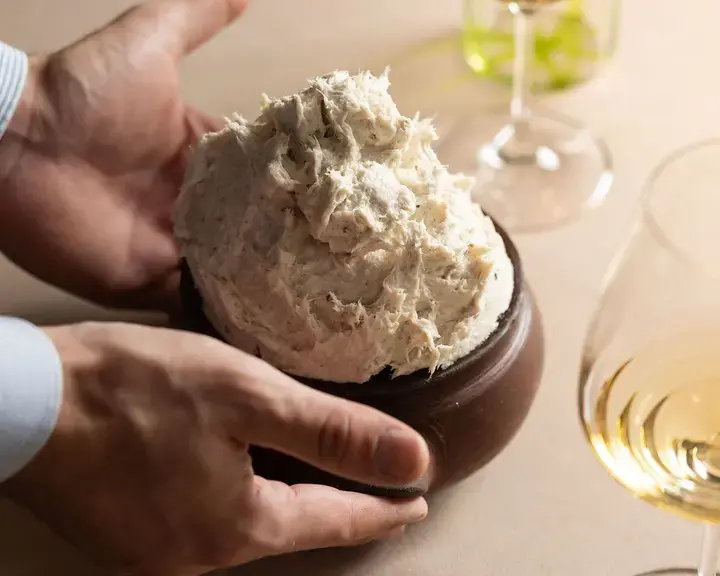
Baccalà mantecato cicchetti.

iStock

Why everyone's talking about baccalà mantecato

Creamy, iconic and now even cinematic: after being featured in The Devil Wears Prada 2, baccalà mantecato (creamed salt cod) is back in the spotlight

Creamy, delicate and incredibly flavourful: baccalà mantecato (creamed salt cod) is one of those dishes that wins you over at first bite. It is not just a recipe, but a symbol of Venetian culinary culture, the undisputed star of the bacari and the ever-present cicchetti.

Today, it’s back in the spotlight thanks to a mention in the new film, The Devil Wears Prada 2, showing just how much certain traditional dishes have become true cultural icons, as well as gastronomic ones. In one scene in the film, it is none other than Italian cuisine enthusiast Stanley Tucci – alias Nigel – who exposes Anne Hathaway’s character, Andy Sachs, by pointing out that baccalà mantecato, being a Venetian speciality, is unlikely to have been served to her as a signature dish by the room service at their Milan hotel.

What is baccalà mantecato?

Let’s start with a little linguistic mystery. Venetian baccalà mantecato is actually made from stockfish – that is, air-dried cod – rather than salted cod. The term baccalà refers to salted cod, whilst stockfish is the name given to dried cod.

The mantecata process involves whipping the fish with oil until it achieves a soft, velvety consistency, almost like a cream. The result is a dish that is elegant in its simplicity, perfect for spreading and sharing.

The origins: a story of the sea and travel

The history of baccalà mantecato has the flavour of adventure. It all began in the 15th century, when Venetian merchant Pietro Querini was shipwrecked on the Lofoten Islands in Norway. It was there that he discovered stockfish, a humble food and one that kept remarkably well. Once back in Venice, this ingredient quickly became part of the local culinary tradition, particularly during periods of religious fasting. Over time, Venetian creativity did the rest, transforming dried fish into one of the most refined dishes in Italian cuisine.

The ingredients? Few, but essential

One of the strengths of baccalà mantecato is its simplicity. There are few ingredients, but they must be chosen with care. First and foremost, high-quality stockfish. Then, equally good extra-virgin olive oil, salt, pepper and garlic (optional).

Some variations include milk to make the cream smoother, but in the most authentic version, the focus is entirely on the balance between the fish and the oil.

The secret lies entirely in the creaming process: in fact, rather than a recipe, creamed salt cod is a technique. The crucial stage is the creaming itself – that is, the emulsification of the fish and the oil. This is when the texture becomes soft and light, the colour takes on a pearly white hue and the flavour becomes balanced and enveloping.

If you want to learn how to make baccalà mantecato like a chef, check out the signature version from chef Daniel Canzian’s eponymous Milan restaurant. Canzian has also been appointed ambassador of the Confraternita del Baccalà.

Tips for perfect results

Even without going into the details of the preparation, there are a few tricks that make all the difference:

  • Choose high-quality stockfish. It’s the foundation of everything: the final texture depends on it.
  • Work the fish at the right temperature. It’s better lukewarm than cold: it emulsifies much more easily.
  • Add the oil a little at a time. It’s a gradual process, almost like making mayonnaise. 
  • Don’t rush. The perfect creaminess only comes with patient preparation.

How to serve it (and why it’s so irresistible)

Baccalà mantecato is at its best when kept simple: serve it on warm bread croutons, with grilled polenta, as an elegant starter.

In Venice, a glass of wine and a slice of bread with baccalà mantecato (those iconic little bites known as cicchetti) is practically a ritual

The charm of baccalà mantecato is entirely down to just a few ingredients, a precise technique and a history spanning centuries and seas. From Venetian tradition to international cinema, this dish demonstrates how Italian cuisine still knows how to make a name for itself, wherever you go.

Spread the flavour – share this story

More from this author

Join the community
Badge
Join us for unlimited access to the very best of Fine Dining Lovers
Unlock all our articles
Badge
Register now to continue reading and access all our exclusive stories.

Already a member? LOG IN