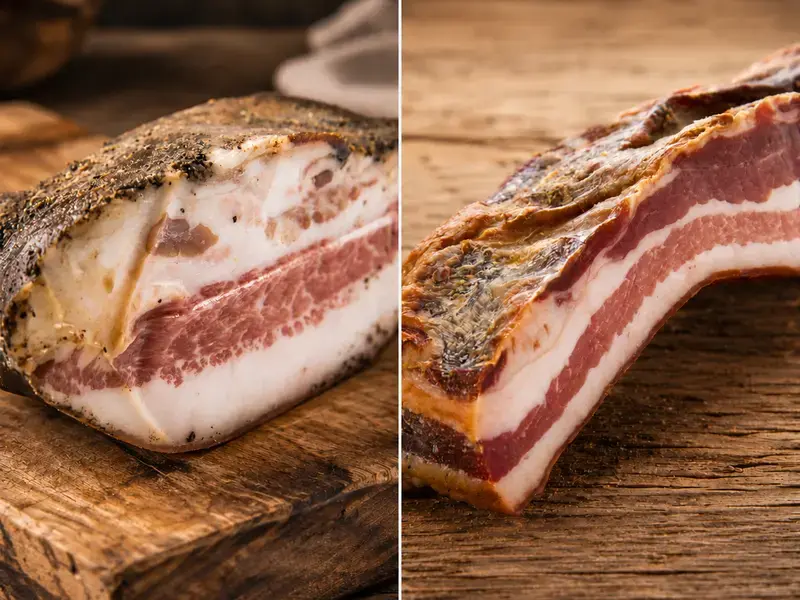
Guanciale and pancetta are pork-derived products, cured with salt and used to add fat, saltiness and savoury depth to a variety of Italian dishes. There are some core differences, however, and their fat content, texture and flavour are distinct. Read on to discover all you need to know about what separates the two and the best dishes to use them in.
What each cut is and where it comes from
If you’re not familiar with what guanciale is, it’s made from the pig’s cheek. The name comes from the Italian word guancia, meaning cheek. It has a high proportion of fat, with relatively little lean meat, giving this cut its signature rich and silky texture. It’s largely associated with central Italy, especially Lazio and Umbria
Pancetta is made from the pig’s belly and has alternating layers of fat and lean meat. It can be found in arrotolata, rolled into a cylinder, or tesa, left flat. Both are cured with salt before being used in cooking.
Curing time and seasoning differences
Guanciale and pancetta are cured with salt, but some producers use ingredients such as pepper, garlic, fennel or other spices too. Guanciale tends to be cured for multiple weeks, letting the thick, fatty cut develop a concentrated flavour and firm texture with savoury and slightly sweet notes. Traditionally, guanciale isn’t smoked.
Pancetta can be cured for weeks, but some are left for much longer. The curing produces a milder, cured-pork flavour, but a long-aged pancetta can be very complex. Select pancetta products are smoked depending on the producer and the style, which brings a different smoky flavour to the product compared to guanciale.
How the fat behaves differently in the pan
One of the key differences between the two is the amount and distribution of fat. Guanciale has a high fat content and much of that fat renders slowly when the meat is cooked. It melts into the pan while the meatier parts become crisp. In Roman pasta dishes, this forms an integral part of the sauce.
Pancetta also renders fat, but the greater concentration of lean meat makes it less rich. This is why guanciale works so well in simple recipes with few ingredients, as it supplies a combination of fat, seasoning and pork flavours all in one.
Why guanciale is non-negotiable in carbonara
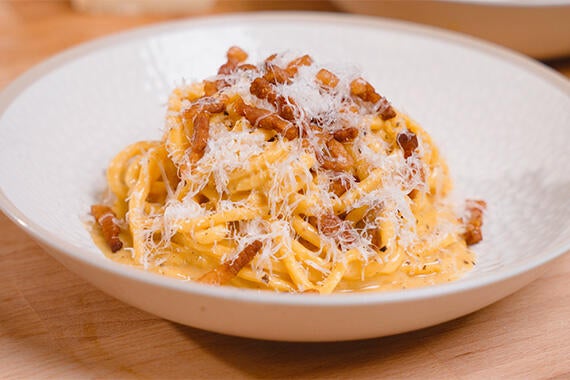
In a traditional carbonara recipe, guanciale is more than a topping and its rendered fat forms an important part of the sauce. As it cooks, the fat becomes the base that helps emulsify the egg, cheese and pasta water into the sauce, giving the carbonara its characteristic richness.
Pancetta can be used for a carbonara, but it produces a less intensely flavoured and rich dish, and smoked pancetta brings a smokiness that isn’t typical for a classic recipe. If you’re wondering where to buy guanciale for carbonara, it can be found in Italian delis, specialist food shops and some larger supermarkets.
When pancetta is actually the better choice
Pancetta is a better choice when you want pieces of cured pork to retain their shape. The balance of fat and lean meat makes it useful in dishes where the pork needs to retain its overall shape.
As such, it works particularly well in soups, stews, pasta sauces and savoury tarts where its flavour complements rather than dominates other ingredients. It can also be easier to find outside Italy as it’s widely sold ready-sliced and diced.
If you choose to use pancetta for a dish that requires guanciale, choose an unsmoked pancetta with generous amounts of fat and don’t expect an identical result, as pancetta may require a slightly different cooking approach.
For more classic Italian cooking inspiration, try chef Riccardo Camanini’s cacio e pepe, for a simple yet flavourful pasta dish.