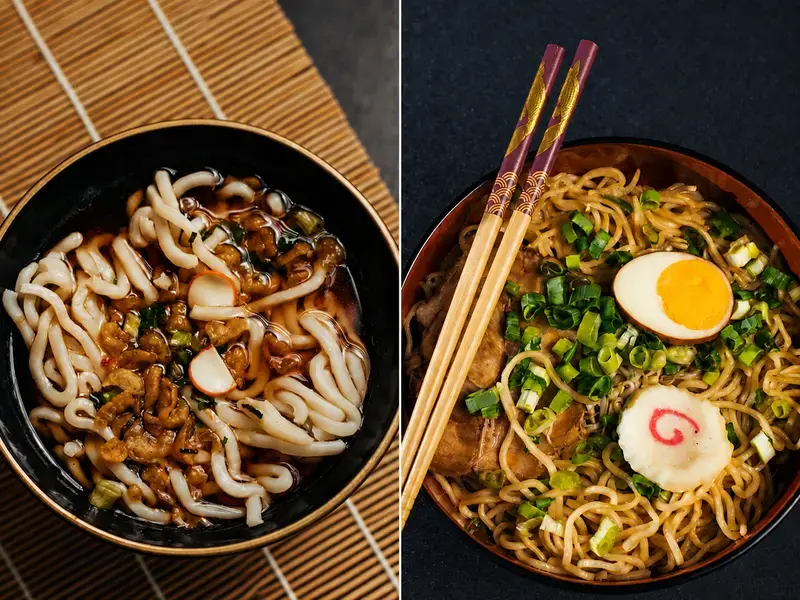
Udon and ramen noodles have distinct histories, ingredients and textures. Though both are associated with Japan, there are some key differences to understand when choosing which one to cook with. Read on to discover all you need to know about these two signature Japanese noodles.
What udon is made of
Udon noodles are made from wheat flour, water and salt, without an alkaline agent. This simple dough creates the characteristic thick, smooth and chewy texture for which udon is best known. They can vary in thickness and shape, but fresh udon is prized for its soft and elastic bite.
What ramen is made of
Japanese ramen noodles are made from wheat flour and water with salt and an alkaline ingredient known in Japanese as kansui, which gives the noodles their signature springiness, firmness and yellow colour.
If you’re familiar with what ramen is, then you will have tasted these noodles, which are specially designed to work with the broth, holding their firmness. They also come in a variety of shapes and sizes, from thin to thick and straight to wavy.
Beyond udon and ramen, Japan has many other noodle varieties, including soba, somen and hiyamugi and you can learn all about seven of the core Japanese noodles in our helpful article.
Where each noodle actually comes from
Udon has deep associations with Japan, although its exact origins are debated. Historical traditions link the noodle to influences from China, with udon eventually developing into a distinct part of Japanese cuisine.
Ramen, on the other hand, has Chinese-Japanese roots and began appearing in Japan in the late 19th century before evolving into the diverse range of regional styles known today.
Broth, texture and how they're served
Udon is more widely used in lighter, cleaner broths with a dashi, soy sauce and mirin base. These noodles can be served hot in broth or cold, and even with dipping sauces on the side. Classic dishes include kake udon and tempura udon.
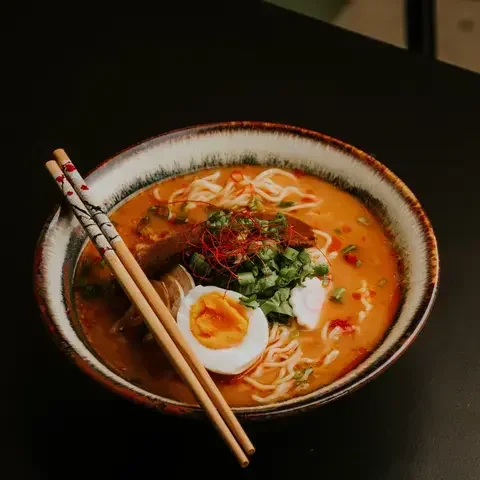
Ramen noodles are most commonly served in bowls of broth, with styles ranging from shoyu ramen to tonkotsu ramen. Recipes vary from clear and delicate to rich and creamy, and the bounce and elasticity of ramen noodles provide an excellent contrast to the broth. Mazesoba is a common brothless dish using ramen noodles, making them very versatile.
If you’re interested in ramen specifically, there are many national and regional variations on the dish, including Korean ramyeon, to explore.
How the two are cooked and kneaded differently
Udon dough is kneaded extensively to encourage the gluten to develop and give the noodles their famed elasticity and chewiness. Traditionally, the dough was sometimes kneaded by foot while enclosed in a bag. Either way, the dough is then rested before being rolled and cut into thick noodles.
Fresh udon is cooked in a pan of boiling water until tender. After cooking, the noodles are often rinsed under cold water and gently rubbed to remove excess surface starch, resulting in a smoother texture.
Ramen noodles are also kneaded, but the addition of kansui changes the chemistry of the dough, contributing to their characteristic firmness and springy texture. Ramen dough is rolled or stretched thinner than udon before being cut into noodles.
Ramen noodles are usually cooked to order in boiling water for a short period of time, occasionally using a noodle basket to help them cook evenly. Unlike udon, ramen noodles are not generally rinsed after cooking but drained and transferred straight into the prepared broth.
Which one to order and when
Udon is a good choice for substantial, comforting dishes, particularly when served in a light dashi-based broth. It works well with hearty toppings such as tempura or beef, while cold udon can offer a lighter option in warmer weather.
Ramen is suited to more intensely flavoured bowls, from rich, creamy tonkotsu ramen to savoury miso ramen. The choice ultimately comes down to the texture, broth and overall style.
Whether choosing udon or ramen, the noodle is only one part of the dish, with broth, seasoning and toppings all shaping the final flavour and texture. Discover all the essential Japanese pantry ingredients you’ll need to build the best bowl with your choice of noodles.