
Now you know how you make pavlova, there are a few key tips and tricks to pay attention to to protect your meringue from cracking, turning soggy or not forming, which we’ll cover below. Firstly, though, it’s important to use baking paper or a silicone mat to build your meringue on top of the baking tray to stop it from sticking.
Common mistakes and how to avoid them
When separating the egg whites, ensure there’s no egg yolk remaining. Even a small amount will prevent the stiff peaks from forming, which you need for the meringue. Keep the eggs at room temperature, as they tend to whip better and create more volume than chilled eggs.
Preventing cracks and collapse
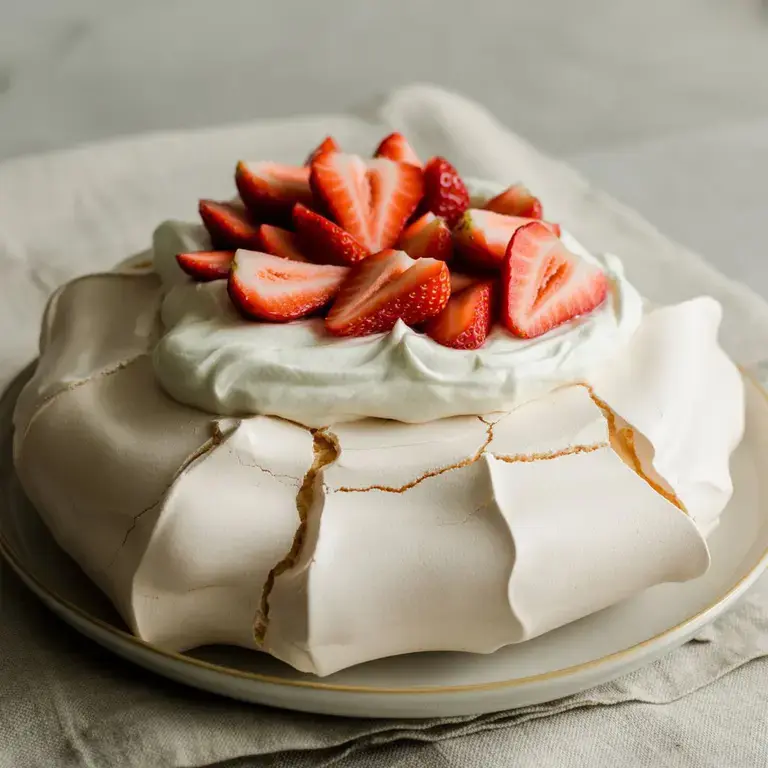
To stop the meringue from cracking, you must cook it low and slow. When it's resting after cooking, resist temptation and don’t open the oven door. A sudden temperature change can cause cracking in the meringue, which is why it’s best to let it rest in the oven whilst the heat gradually reduces after baking.
The lemon juice is a vital ingredient to ensure the meringue doesn’t collapse, as it helps to stabilise the mixture. You can also use a teaspoon of vinegar if preferred.
Getting the perfect chewy centre
As in the pavlova recipe above, the easiest way to create that signature chewy centre is to include the cornflour. This helps to maintain a soft and marshmallow-like interior during baking, whilst the outside hardens.
Pavlova is typically made using French meringue as it creates the firm outer centre with the chewy inner core. It’s also one of the simplest styles to make in the kitchen. Other varieties, such as Italian or Swiss meringue, are better suited to macarons or stand-alone meringues.
Toppings and flavour ideas for pavlova
Traditional pavlova toppings feature whipped cream, either unsweetened or lightly sweetened, as in this recipe, topped with a selection of fresh seasonal fruit. Strawberries are the classic fruit used, but you’ll also find many pavlovas made with other berries, kiwi and even passionfruit. To finish, you dust the fruit with extra icing sugar.
For an even sweeter option, some bakers will add curls of milk chocolate, or a drizzle of salted caramel sauce or honey to create a truly indulgent treat.
How to store pavlova and leftovers
Pavlova is best enjoyed within a few hours of making, once it’s been filled with fresh cream and fruit. Any leftovers must be stored in the fridge in a covered dish and will only keep for up to one day. Once you’ve combined the meringue with the fruit and cream, it will become soggy over time.
As pavlova is made using only the egg whites, it’s a handy recipe to turn to when you have leftover egg whites from recipes using only egg yolks. Or for a savoury option, you could try making egg whites omelettes, for a light and fluffy breakfast idea.