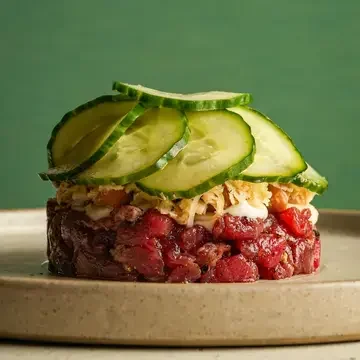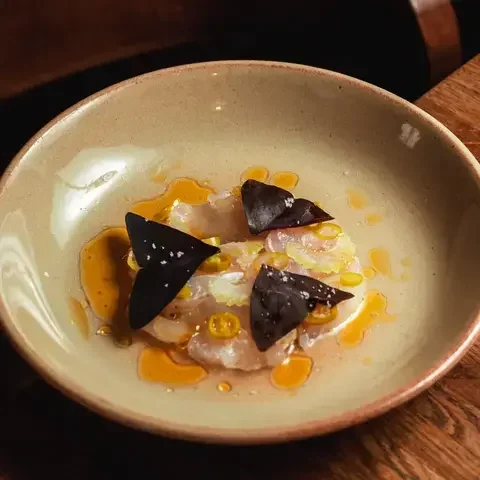
Both chutoro and otoro are fatty tuna cuts prized in Japanese sushi for their rich flavour, soft texture and high fat content. The key distinction is generally the fat content: otoro is the fattiest of the two, while chutoro sits between otoro and leaner akami.
What toro means in Japanese sushi
Toro is a general term for the fatty portions of tuna rather than a single specific cut. These fatty portions are usually taken from areas around the belly and underside of the fish. The name is thought to relate to torotto, a Japanese word describing something soft or melting.
It’s famous for its marbling, tenderness and rich, almost buttery mouthfeel. The most expensive toro usually comes from bluefin tuna, and is commonly classified as otoro or chutoro according to its fat content and location on the fish.
For contrast, akami is the leaner flesh from the upper or central part of the tuna, with a meatier texture, cleaner flavour and much less fat.
Otoro: the fattiest, priciest cut
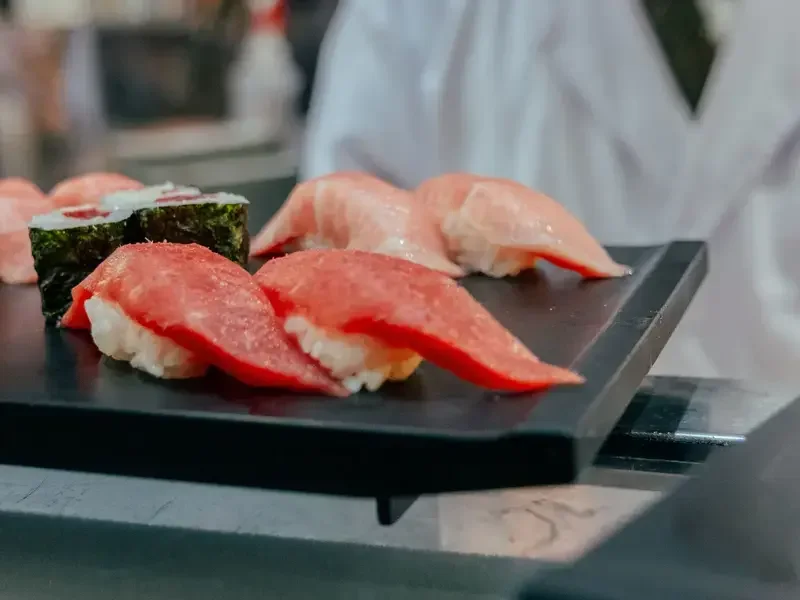
Otoro is the fattiest of the main toro classifications and is mostly taken from the fattier belly sections, particularly towards the head. It has prominent fat marbling through its pink to pale flesh and a melt-in-the-mouth quality.
Its flavour is rich and buttery, and as only a small amount of otoro can be obtained from each tuna, it is often one of the most expensive tuna cuts on a sushi menu.
It doesn’t require extensive preparation and is usually served as popular nigiri or sashimi sushi, where the fat takes centre stage. Nigiri is a style of Japanese sushi made with a small, hand-pressed oval mound of rice topped with a slice of raw fish, whereas sashimi is made from fresh, raw fish sliced into thin pieces and served without rice.
Chutoro: the balanced middle ground
Chutoro sits between otoro and akami in terms of fat content and is largely taken from the less fatty belly sections. While it has noticeable marbling, it retains more of the firm, meatiness associated with leaner tuna.
It has a rich flavour without the intensity of otoro, making it a good choice for those looking for a balance between richness and the flavour of the tuna. Chutoro is softer than akami but firmer than otoro, and is commonly served as nigiri or sashimi.
Quality and seasonality also play an important role. The flavour and texture of tuna can vary according to the species, provenance, age and condition of the fish, while the fat content can change depending on the season. This means a well-handled piece of chutoro can be more appealing than a lesser-quality piece of otoro.
How to order and taste them at a sushi counter
Ordering at a sushi counter can be intimidating, but a little knowledge can make it easier to navigate.
When ordering toro, start with akami if you want to compare all three. Its clean flavour provides a useful reference point before exploring the richer cuts. Tasting chutoro and then otoro demonstrates how the fat content increases in the different cuts and is an easy way to understand their individual offerings.
At a sushi counter, nigiri is a good way to compare the three, as the rice and fish are presented simply without additional ingredients competing with the flavour of the tuna. It’s also best not to overload on soy sauce or wasabi, as this can overwhelm the subtle characteristics of fatty tuna.
Try to pay attention to the texture of the cuts as much as the flavour, especially with the otoro, where its defining feature is the way the fat softens and melts in the mouth. Otoro isn't necessarily the best cut simply because it is the rarest and most expensive. Some sushi enthusiasts may prefer the balance of chutoro, which offers richness without the intensity of otoro.
It’s worth noting that the boundaries between chutoro and otoro are not completely standardised, and sushi chefs and fishmongers may use different terminology for the various sections of the tuna. Ask the sushi chef or fishmonger where the cut came from, as its location can influence the overall flavour.