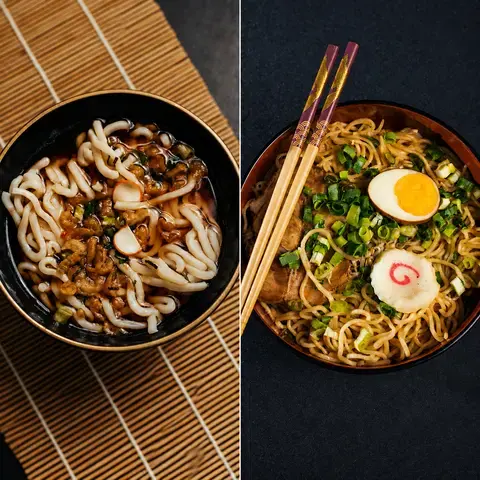
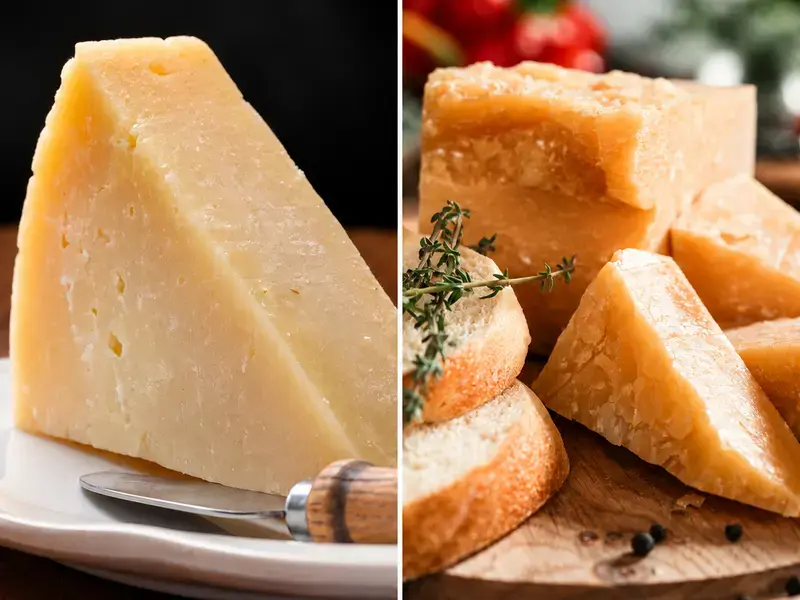
Pecorino Romano and Parmigiano Reggiano are often used interchangeably in recipes, but there are stark differences that are worth being aware of to make an informed choice for your dish. Here, we’ll cover what sets these two apart, from production to flavour to texture to how each cheese is aged.
Milk, region and PDO status
Firstly, Pecorino Romano is made from sheep’s milk, and the word pecorino is derived from pecora, the Italian word for sheep. It has PDO status and is produced in Sardinia, with production also permitted in Lazio and in Grosseto in Tuscany.
To meet the PDO specifications, Pecorino must be made from whole sheep’s milk from the defined production area, thermised but not pasteurised and made using lamb rennet.
Parmigiano Reggiano has PDO status and is produced only in the provinces of Parma, Reggio Emilia, Modena, Mantua and Bologna and is made from raw cow’s milk. The ingredients are simply milk, salt and rennet. It shouldn’t be confused with cheese labelled Parmesan, a generic term that is not subject to the same PDO production rules.
How each cheese is aged, and why it matters
Both Pecorino Romano and Parmigiano Reggiano are hard cheeses that are aged for an extended period, but the requirements vary according to the PDO.
Pecorino Romano can be sold after a minimum of five months for table cheese and eight months for grating cheese. Parmigiano Reggiano, however, has to be aged for at least 12 months, and many wheels spend as long as 36 months ageing.
The ageing process affects both the texture and flavour. Longer-aged cheeses tend to become harder, drier and more concentrated in aroma. For Parmigiano Reggiano maturation develops pronounced nutty and umami-rich flavours, whereas older Pecorino Romano becomes firmer, drier, saltier and more intense than younger counterparts.
Flavour and texture differences
Pecorino Romano is saltier, and Parmigiano Reggiano has greater complexity and tends to be more buttery. Their textures are comparable and both can be eaten in chunks, shaved or grated. Parmigiano, however, will develop a distinct crystalline texture when well aged.
If you’re comparing Pecorino vs. parmesan more generally, remember that Pecorino cheese brings salt and sharpness, and parmesan offers nuttiness and umami flavours.
Which Roman pasta dishes call for Pecorino
Pecorino Romano is central to many classic Roman pasta dishes, including cacio e pepe. It’s the defining cheese of this recipe combined with black pepper and pasta water to make the creamy sauce. For a twist on this dish, try chef Daniele Uditi’s cacio e pepe pizza or master the classic dish with a traditional recipe from chef Riccardo Camanini.
To learn more about Pecorino, listen to top advice from Italian Pecorino master, Nunzio Marcelli.
When Parmigiano is the better choice
Parmigiano Reggiano is a good choice when you need a milder, nuttier and more rounded cheese flavour. It works well grated over soups, risottos, vegetables and baked pasta dishes where the cheese is needed to add savoury depth without dominating the overall taste profile.
It has a complex umami character which makes it excellent for finishing dishes at the table for a more theatrical presentation. It can also be used in pesto when a milder, less salty cheese flavour is preferred.
Can you substitute one for the other?
You can substitute Pecorino Romano for Parmigiano Reggiano, and vice versa, but the result will differ in flavour, saltiness and texture.
Parmigiano Reggiano will bring a less salty, milder and nuttier taste to a dish compared to Pecorino Romano. Alternatively, Pecorino will bring a sharper, saltier and more pronounced flavour to the plate. Specifically in dishes, such as cacio e pepe, it’s noticeable when Pecorino is substituted for Parmigiano, as the former is the star ingredient of this dish.
In a carbonara, some recipes use a blend of the two cheeses, while traditional versions generally favour Pecorino Romano. For everyday uses such as topping roasted vegetables or pasta bakes the two cheeses can be used interchangeably without dramatically altering the dish’s profile.
If you do decide to make the swap, make sure you consider the overall saltiness as well as the melting behaviour of the cheese, and adjust the quantity as needed, rather than simply switching in equal amounts.