Discover the world of tempeh, the fermented soy plant-based protein, in our guide. From recipes with tempeh to learning what tempeh is made of, find out all you need to know about this superfood below.
What is tempeh and how is it made?
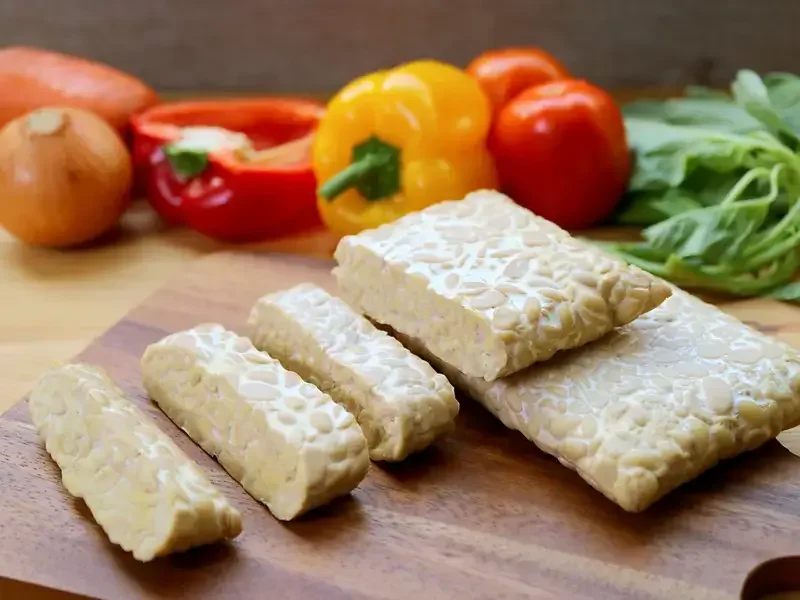
Tempeh is a fermented soy plant-based protein, originating from Indonesia. Made with a base of whole soybeans, it’s known for its nutty flavour and firm texture. Unlike other plant-based proteins, such as tofu, tempeh undergoes a fermentation process.
To make tempeh, the soybeans are first soaked in water for around 10 hours to soften. The beans are then cooked or steamed, drained and cooled to room temperature before being mixed with a starter culture. This culture, or fungus, binds the beans together during the fermentation process. The beans are spread in a thin layer in perforated plastic bags, allowing air to circulate to aid fermentation.
During fermentation, the beans are kept warm, at around 30°C, for a day or two. At the end of fermentation, a tempeh cake forms that’s solid, lightly nutty in aroma and fully covered in white mycelium grown by the fungus. The tempeh is then ready for cooking with.
Fermentation and flavour: what sets tempeh apart
Tempeh is known for its nutty, earthy flavour with a lightly tangy note from the fermentation process. Firm and chewy, it has a unique texture that’s more substantial than that of silky tofu, and less elastic than seitan. The fermentation process gives tempeh a special flavour profile that’s not found in any other plant-based protein alternatives. This process is also thought to increase nutrient bioavailability when the tempeh is consumed.
Culinary uses of tempeh in elegant dishes
Before starting cooking, it’s best to briefly steam or blanch the tempeh to remove any unwanted bitter notes. Tempeh works well when marinated and can be paired with soy-based, miso-based, citrus-based or even herb-based marinades to dial up the flavour in your dish. For an elegant cooking technique, try pan-searing the tempeh in slices to create an inviting, caramelised exterior. You could even dust the tempeh with cornstarch to ensure it crisps up in the pan.
For refined recipe ideas, try twists on popular meat-based dishes, such as a tempeh ‘steak’ with courgette ribbons, for a plant-based approach. You can also use tempeh as a crumbled garnish over an indulgent, yet sophisticated risotto, or on top of a creamy soup to start. Tempeh skewers are a playful canapé, and can be arranged neatly on a small serving plate for a high-protein starter. If you want to build an elegant vegan menu for your next dinner party, take a look at our selection of the top 10 popular vegan recipes.
If you’re wondering whether you can eat tempeh raw, it is indeed possible. Instead of cooking the tempeh, you can slice it thinly and add it to your favourite salad, or crumble it over the top of a delicious grain bowl. When eaten raw, it will have a stronger taste, so many chefs prefer to cook it first to soften the flavour.
Marinated and grilled preparations
There are many tried and tested methods when it comes to how to cook tempeh. Whichever route you take, tempeh is perfectly suited to being marinated and can be used with a variety of different sauces and seasonings. Taking inspiration from East Asian cooking, you can marinate tempeh in a classic soy and ginger sauce, with a dash of honey. The balance of salty, savoury, spicy, sweet and umami flavours pairs effortlessly with the nutty and earthy notes of the tempeh.
Or, if you’re planning to grill the tempeh, try a classic barbecue marinade. With a mix of barbecue sauce, smoky paprika and maple syrup, it’s a tasty way to prep your tempeh before transferring to the grill. And, when grilling tempeh, steam for 10 minutes beforehand to remove any bitter flavours. Then you can either cut it into thick slices for grilling, as you would a steak, or dice into cubes to be added to skewers.
Pairing tempeh with refined ingredients
Tempeh is a natural pairing with refreshing and zingy courgettes. Its earthy and dense texture contrasts beautifully with a courgette’s light and tender texture. For an even more elegant approach, try cooking tempeh with courgette flowers.
The fresh and grassy taste of asparagus tips provides another inviting contrast to the nutty notes of tempeh. Try making pan-seared tempeh with asparagus ribbons and a lemon and herb vinaigrette, for an elevated start to the evening’s meal.
To add a kick of umami, cook up an indulgent creamy wild mushroom sauce with shallots, thyme and garlic to add your tempeh to, and enjoy mixed into a plate of pasta.
Tempeh vs. tofu: what’s the difference?
If you’re left asking yourself what the difference is between tofu and tempeh, there are a few key points to be aware of. Firstly, tofu is made from a base of soy milk, whereas tempeh is made from whole soybeans. This important base affects everything in these ingredients, from the final texture to the end flavour.
Tofu is very soft and spongy, with little flavour, whereas tempeh is firmer and denser in texture, with an unmistakable nutty and earthy taste. This is partly due to tempeh’s fermentation process, which tofu does not undergo. But of course, the world of plant-based superfoods from Asia doesn’t stop at tofu and tempeh. Natto beans are a rising soybean superfood that’s growing in popularity and ideal for enjoying on their own. Discover more about the history of natto beans and their health properties in our helpful article.