Buttermilk appears in recipes for American-style pancakes, Irish soda bread, fried chicken marinades and ranch dressing, yet many cooks remain uncertain about what it actually is. In Britain, traditional buttermilk differs from the cultured version common in supermarkets, and understanding the distinction helps when choosing products or making substitutes at home. This guide explains how buttermilk is made, what it contributes to dishes, and how to store and replace it when needed.
What is buttermilk?
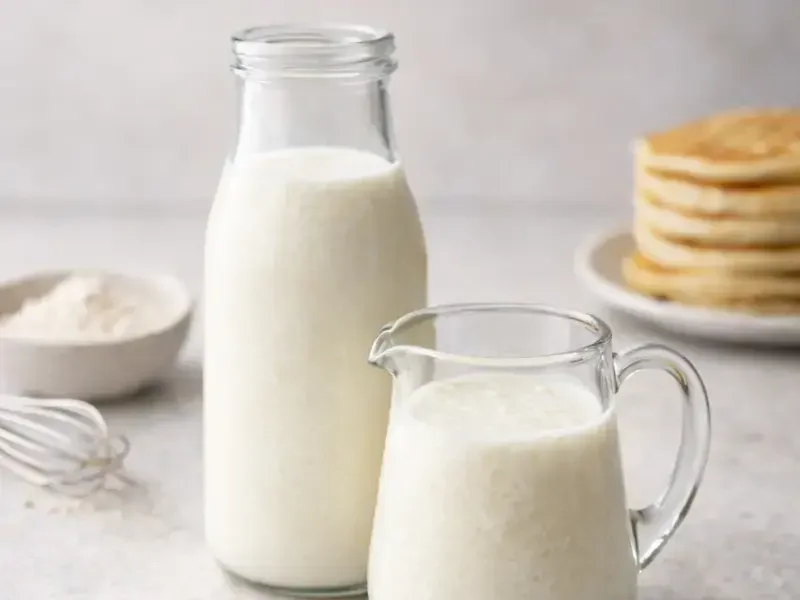
Buttermilk is a fermented dairy product with a tangy flavour and a thick, pourable consistency. The name originally referred to the liquid left behind after churning cream into butter – a thin, slightly sour by-product that cooks valued for its acidity and lean profile. This traditional buttermilk is still produced on some British farms and occasionally appears at farmers' markets, though it has become uncommon in everyday use.
Most buttermilk available today is cultured rather than churned. Producers add lactic acid bacteria to pasteurised milk, and as the bacteria ferment the lactose, they produce lactic acid that thickens the milk and sharpens its flavour. Cultured buttermilk offers more predictable results than the traditional kind, with a clean tang, a body somewhere between milk and single cream, and a fat content that typically sits around 1-2%. It also keeps well once opened, lasting longer than fresh milk when stored properly.
How buttermilk is made
Traditional buttermilk forms naturally during butter production. When cream is churned, fat globules clump together to form butter, leaving behind a watery liquid rich in milk proteins, lactose and naturally occurring bacteria. This liquid sours gently as it sits, developing a mild tang without any deliberate fermentation.
Cultured buttermilk follows a more controlled process. Producers start with pasteurised low-fat milk, then introduce specific strains of lactic acid bacteria such as Lactococcus lactis or Leuconostoc mesenteroides. These bacteria consume the lactose and produce lactic acid, which lowers the pH, coagulates some of the milk proteins and creates the characteristic thick texture and sharp flavour. The fermentation typically takes 12 to 24 hours at a controlled temperature, after which the buttermilk is chilled to halt the process. The science behind milk fermentation explains how these bacterial strains influence acidity, texture and flavour development in cultured dairy products.
Some producers also make buttermilk at home by adding an acid such as lemon juice or vinegar to fresh milk, which mimics the tangy flavour and causes the milk to thicken slightly. While this method works well as a quick substitute, it lacks the depth and complexity that live cultures bring to proper buttermilk.
How buttermilk tastes and how it behaves in recipes
Buttermilk has a clean, lightly sour taste that sits between yoghurt and cream, with a subtle tang that never feels aggressive. The acidity is gentle enough to drink it on its own, though most cooks value it more for what it does in recipes than as a beverage.
In baking, buttermilk reacts with bicarbonate of soda to produce carbon dioxide, which lifts batters and doughs without the need for baking powder. This reaction also contributes to a tender crumb, as the acidity interferes with gluten development and keeps baked goods soft rather than tough. Scones, soda bread and American-style pancakes all rely on this chemistry for their characteristic lightness and delicate texture.
Beyond leavening, buttermilk adds moisture and body without heaviness. Its thickness coats ingredients evenly, making it useful in marinades where it tenderises meat by breaking down surface proteins. In dressings and sauces, it provides a creamy base with less fat than cream or mayonnaise, and its acidity naturally balances rich or fatty elements.
The cultured bacteria in buttermilk also contribute subtle complexity. Where fresh milk tastes sweet and neutral, buttermilk brings a faint dairy funk that deepens savoury dishes and rounds out sweetness in baking, adding dimension without drawing attention to itself.
How to use buttermilk in baking and savoury dishes
Buttermilk works across sweet and savoury cooking, bringing moisture, tenderness and a balanced tang to a wide range of dishes.
In baking, it appears most often in recipes that use bicarbonate of soda as the primary leavening agent. Irish soda bread relies on the reaction between buttermilk and bicarbonate to rise quickly without yeast, producing a dense yet tender loaf with a distinctive crust. American-style pancakes and waffles use buttermilk for a light, fluffy texture and a hint of sourness that balances syrup and butter. Scones made with buttermilk have a softer crumb than those made with milk alone, and cakes such as red velvet or devil's food benefit from the acidity, which keeps the texture moist and fine.
For savoury cooking, buttermilk shines in marinades. Soaking chicken in buttermilk before frying tenderises the meat and helps coatings adhere, resulting in crisp, well-seasoned fried chicken. The same principle applies to pork chops or firm white fish, where a brief soak softens the surface and adds subtle flavour.
Buttermilk also forms the base of classic dressings such as ranch and blue cheese, where its creamy body and acidity cut through richness without the heaviness of soured cream or mayonnaise. Whisked into mashed potatoes, it adds a gentle tang and silky texture. Stirred into soups or stews at the end of cooking, it enriches without curdling if the heat is kept moderate.
For home cooks who want to make their own buttermilk, the process is straightforward and requires only milk and a starter culture or a small amount of existing buttermilk.
Buttermilk substitutes and storage tips
When buttermilk is not available, a few quick substitutes can mimic its acidity and texture well enough for most recipes.
- Milk and lemon juice or vinegar: add a tablespoon of lemon juice or white vinegar to 240ml of milk, stir and let it stand for five to 10 minutes until it thickens slightly. This works well in baking, where the acid must react with bicarbonate of soda, though it lacks the depth of cultured buttermilk.
- Milk and cream of tartar: mix a teaspoon and a half of cream of tartar with 240ml of milk. This provides acidity without adding liquid from lemon or vinegar, useful when precise moisture levels matter.
- Plain yoghurt thinned with milk: whisk equal parts plain yoghurt and milk to achieve a pourable consistency similar to buttermilk. This substitute brings some of the tangy, cultured flavour that acid-spiked milk lacks.
- Kefir: use kefir in a one-to-one swap for buttermilk. It has a similar tang and consistency, though the flavour can be slightly more pronounced.
Store buttermilk in the fridge in its original container, tightly sealed. It typically keeps for one to two weeks past the date on the carton, though the flavour may sharpen as it ages. If it smells sour in an unpleasant way or develops mould, discard it. Buttermilk can be frozen for up to three months, though the texture may separate slightly upon thawing. Shake or whisk it well before use, and reserve frozen buttermilk for cooked dishes rather than dressings or uncooked applications where texture is more noticeable.