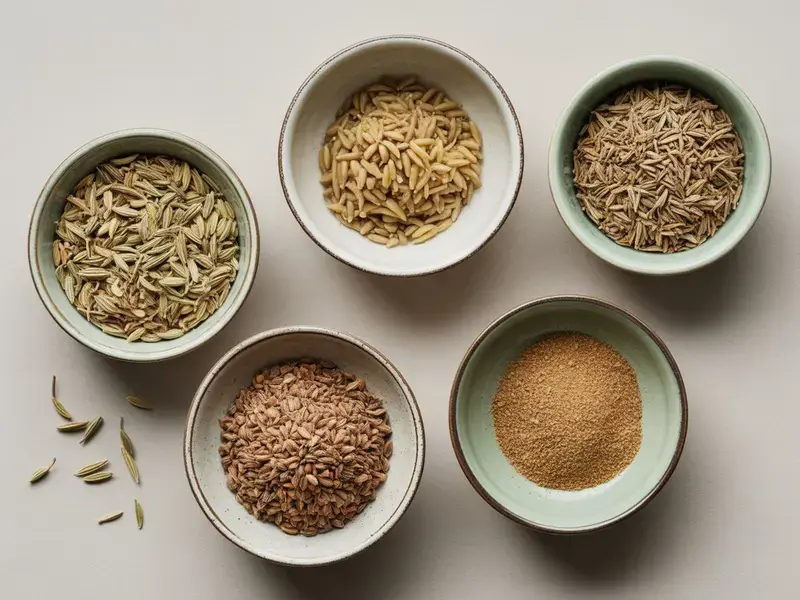
Fennel seeds add a gentle anise note, warmth and subtle sweetness to many cuisines. When the flavour is not desired or the cupboard is bare, a few well-chosen substitutes can recreate the profile with good balance. This guide sets out what fennel seeds taste like, when recipes rely on them, which swaps work best and how to use them with clear ratios.
What fennel seeds taste like
Fennel seeds are aromatic and slightly sweet with a clean anise note and soft herbal warmth. They are less intense than star anise and more rounded than liquorice, with a gentle bitterness that keeps them comfortable in savoury dishes. Toasting deepens nuttiness and softens sharp edges, while crushing releases volatile oils for a fresher, louder aroma.
When recipes call for fennel seeds
Recipes use fennel seeds to add lift without heat, to balance richness and to connect sweet and savoury elements.
- Sausage and charcuterie mixes for a bright, distinctive perfume.
- Roasts and braises with pork, lamb or oily fish, where a light anise note cuts through fat.
- Tomato sauces and ragù, where crushed seeds add complexity.
- Bread, crackers and spiced biscuits, where a small amount gives aromatic depth.
- Pickles and chutneys, where whole seeds add texture and fragrance.
Best substitutes for fennel seeds
Choose a substitute that matches the role fennel is playing in your dish; use whole spices when texture matters and ground spices when you want quick dispersion.
Anise seeds
Flavour: sweet, clear anise, a touch stronger than fennel.
Swap ratio: 1:1 for most dishes; reduce slightly in delicate baking.
Caraway seeds
Flavour: warm, earthy and lightly peppery with a gentle anise line.
Swap ratio: 1:1 in breads and slaws; in sausages or braises, use roughly 3 parts caraway to 4 parts fennel by weight.
Dill seeds
Flavour: herbaceous, citrusy and mild, close to dill weed but deeper.
Swap ratio: 1:1 when using dill seeds in place of fennel seeds in pickles and seafood dishes. If using dill weed (leaf) instead of fennel seeds, use half the amount of the dry measure.
Star anise
Flavour: intense, liquorice-like and woody.
Swap ratio: 1 whole star anise for every 2 tsp fennel seeds in long-simmered sauces or stocks; remove before serving.
Cumin plus a touch of anise
Flavour: cumin gives warmth and earth, and anise adds the missing sweet note.
Swap ratio: per tsp fennel, use ¾ tsp cumin and ¼ tsp anise seed, especially in tomato sauces or bean dishes.
Liquorice root (culinary)
Flavour: sweet liquorice with mild bitterness; no seed texture.
Use: infuse a small piece in liquids for sauces and syrups, then remove; not suited to quick sautés.
Celery seed
Flavour: savoury, slightly bitter, aromatic.
Use: where fennel provides herbal lift in slaws or dressings; swap 1:1 and add a pinch of anise for sweetness if desired.
How to swap fennel seeds in savoury dishes and baking
Match the original preparation method to get the best from a substitute.
- Whole seed for whole seed: toast gently in a dry pan until fragrant, then add as directed. Works well with anise, caraway and dill seeds.
- Ground for ground: grind just before use for maximum aroma. If the recipe asks for ground fennel, use ground anise or a caraway-and-anise blend. Start 1:1, taste and adjust.
- Long-simmered sauces and stocks: use star anise whole, added early and removed before serving. One star anise will usually replace 2 tsp fennel seeds in 1-1.5 litres of liquid.
- Breads and crackers: caraway seeds deliver a familiar bakery aroma; swap 1:1 and consider a pinch of anise seed for sweetness.
- Pickles and chutneys: dill seeds provide a clean, classic jarred flavour; swap 1:1 and add a few anise seeds for a rounder finish.
- Sausages and patties: blend 3 parts caraway with 1 part anise by weight to mimic fennel’s sweetness and herbal lift without shouting liquorice.
When not to replace fennel seeds
Avoid swapping when fennel is a signature flavour rather than a background note. Classic Italian sausage, some Indian spice blends and specific breads rely on fennel for identity, and strong substitutes will change the dish.
Skip star anise and liquorice in quick sautés where their intensity can dominate. If a recipe is built around fresh fennel bulb or fronds, seeds alone will not replicate the texture and brightness, so treat the dish differently using the whole plant.
For a broader context on using fennel in all its forms, the beginner’s guide mentioned earlier is useful; for pantry planning, a list of healthy seeds to keep on hand is a good companion.
With a clear sense of flavour, role and ratio, you can confidently replace fennel seeds and keep dishes balanced, aromatic and distinct.