
Start by adding the guanciale to a cold pan over a gentle heat, as this gives the fat time to render allowing it to become crisp instead of burnt. You also don’t need to add oil to the pan as guanciale provides plenty of fat for cooking the sauce. It is possible to follow a guanciale recipe at home to make your own, but it’s quicker and easier to purchase from your local deli.
We’ve introduced dry white wine to the recipe above to deglaze the pan, which adds acidity and lifts the rich, browned flavours from the bottom for a more complex sauce. As guanciale and pecorino Romano are naturally salty, make sure you taste the sauce ahead of seasoning.
It’s best to add the Pecorino Romano off the heat as it can clump. The pasta cooking water also helps to achieve the perfect consistency for the sauce, encouraging it to cling to the pasta.
Amatriciana vs. gricia: the dish before tomatoes
Gricia is a tomato-free version of amatriciana, with both dishes built around the same core ingredients of guanciale, Pecorino Romano and black pepper. Amatriciana adds whole peeled tomatoes, whereas gricia does not.
As such, gricia has a glossy, emulsified sauce with subtle nutty flavours from the Pecorino Romano. They’re both closely associated with central Italian cooking and the Lazio region, although the exact historical origins of the dish are debated.
For more creamy-based pasta inspiration, try making a traditional carbonara or follow this foolproof carbonara recipe, if you’re new to making this dish. And for any leftover Pecorino Romano, master a classic cacio e pepe with chef Riccardo Camanini’s simple recipe.
Spaghetti or bucatini: the Amatrice-Rome divide
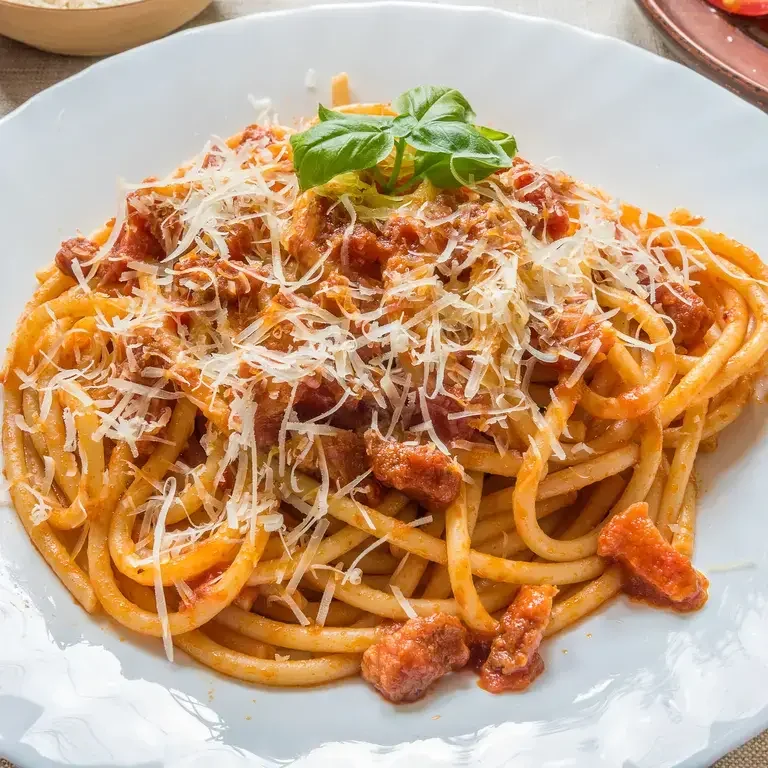
In the recipe above, we’ve shared a bucatini all’amatriciana, but you can make this dish using spaghetti instead. Bucatini is associated with the Roman interpretation of this dish, whereas spaghetti has stronger ties to the dish’s origins in the town of Amatrice.
Bucatini’s thick, hollow strands have a substantial bite and carry the tomato and guanciale sauce well. Spaghetti, however, is thinner and delicate, and the sauce only coats the strands.