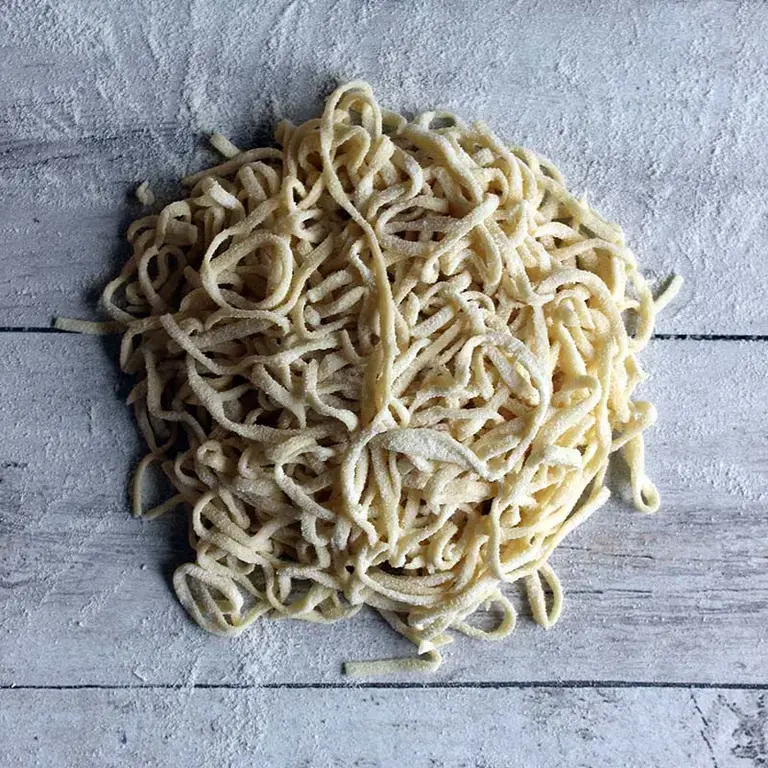

The core ingredients for ramen noodles are flour, water, salt and kansui. Ramen dough is firmer and lower in hydration than many other noodles, giving it its chewy texture. The dough will seem dry and crumbly at first but will come together when rested.
When making the noodles in this recipe, we’ve recommended mixing the kansui with the water before adding it to the flour to help distribute the alkaline solution evenly throughout the dough. The dough needs to be rolled as evenly as possible; you can use a pasta maker if you have one at home. Aim for a maximum thickness of two millimetres, for the best results.
Cook fresh ramen noodles in rapidly boiling water until just tender, then drain thoroughly and add to the broth immediately. Avoid leaving them to sit in the cooking water, as they will continue to soften.
Why kansui makes ramen noodles springy and yellow
Kansui is an alkaline solution used to make ramen noodles. It changes the structure of the dough, giving it its firm, elastic and springy texture that distinguishes ramen from other noodles.
The kansui also contributes to the noodles’ distinctive yellow colour. Liquid and powdered forms are available and if you cannot find kansui locally, you can substitute in baked bicarbonate of soda.
Once you’ve perfected the noodles, it’s time to learn how to make ramen broth. There are lots of different styles to explore hailing from different regions in Japan, and even internationally with styles such as Korean ramyeon.
Storage and freezing
Fresh ramen noodles are best eaten on the day they are made, when their texture is at its springiest. If you do decide to make them ahead of time, dust well with cornflour and store in an airtight container for up to two days.
To freeze, separate the noodles into individual portions, dust with cornflour to prevent sticking and freeze on a tray first until firm, before transferring to an airtight container. Frozen ramen noodles can be cooked directly from the freezer by adding them straight to boiling water. Allow a little extra cooking time compared with fresh noodles.