Ramen is more than just soup. In Japan, it’s a ritual of patience and precision, where flavour is layered over time to create a deeply satisfying balance of salt, fat and umami. Making ramen broth from scratch may seem like a daunting task, but understanding the foundations – ingredients, timing and technique – reveals why it’s such a revered art.
What makes a ramen broth authentic?
Authenticity in ramen broth doesn’t depend on strict rules but on the integrity of flavour. An authentic broth captures umami through natural ingredients and long, careful cooking. It’s built in layers, starting with bones or vegetables, then enriched with aromatics, seasoning and tare – the concentrated flavour base added just before serving.
The difference between ramen and ramyeon (its Korean cousin) lies precisely in this craftsmanship. While ramyeon refers to quick, often instant noodles with readymade seasoning, ramen broth is slow-cooked, nuanced and handcrafted. In Japan, chefs may simmer their broths for more than 12 hours, refining the balance between richness and clarity.
Every region of Japan has its preferred style, from the light and delicate broths of Tokyo to the creamy, pork-based tonkotsu of Kyushu. The best ramens in Japan are defined not by the toppings or noodles, but by the complexity and depth of the broth itself.
Different types of ramen broth
Shoyu
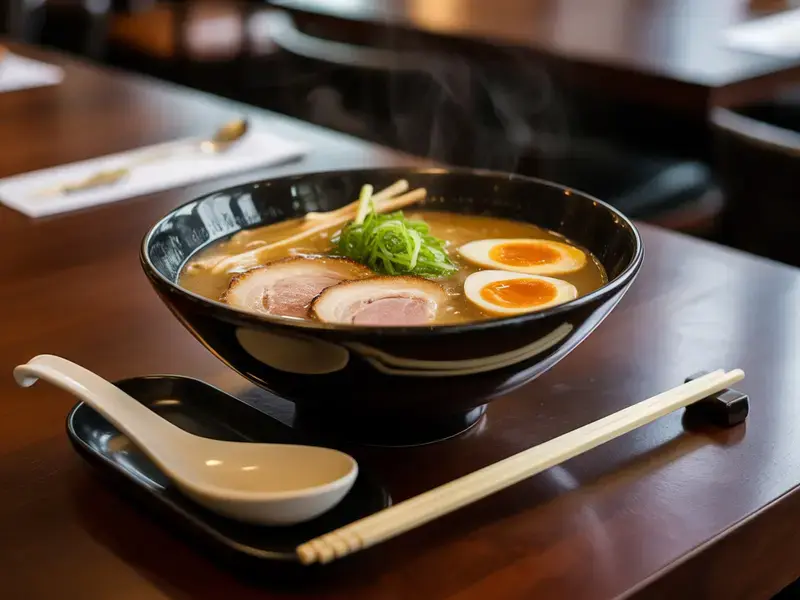
Shoyu, or soy sauce ramen, is the most common and perhaps the most balanced style. Its base is typically made from chicken or vegetable stock seasoned with soy sauce, which adds savoury depth and a gentle sweetness. The result is a clear, amber-coloured broth with a clean yet satisfying flavour, often paired with spring onions, bamboo shoots and soft-boiled eggs.
Miso
Originating from Hokkaido, miso ramen is rich and full-bodied, with fermented soybean paste giving the broth a creamy texture and pronounced umami. The seasoning varies from sweet white miso to robust red miso, producing different levels of intensity. It’s often served with corn, butter and bean sprouts – ingredients that highlight Hokkaido’s cold climate and agricultural bounty.
Tonkotsu
Perhaps the most famous variety, tonkotsu ramen is made by simmering pork bones for many hours until they release collagen and marrow, resulting in a cloudy, creamy-white broth. It’s deeply savoury, almost buttery in texture, and forms the foundation for some of Japan’s best-loved ramen shops in Fukuoka and Hakata. A well-made tonkotsu broth should feel rich but not heavy, coating the palate without overwhelming it.
Shio
Shio, meaning “salt,” is the oldest and lightest form of ramen broth. Traditionally made from chicken or seafood, it has a pale, translucent appearance and a delicate, briny character. The salt enhances the natural flavours of the ingredients rather than masking them. Shio ramen is often served with thinner noodles and simple toppings such as nori and leeks, showcasing the purity of the broth.
Key ingredients and flavour boosters
The foundation of any ramen broth lies in its base ingredients: bones, water and time. Pork bones, chicken carcasses or a mix of both create structure and body. For a lighter version, vegetable or seafood bases are used, featuring kombu (kelp) and dried bonito flakes to introduce a clean, oceanic umami.
Aromatics are essential. Onions, garlic, ginger and leeks are charred or roasted before simmering to add depth and sweetness. The balance of these flavours determines whether the broth leans towards richness or refinement.
Flavour boosters such as tare – a seasoning concentrate – personalise the broth. The tare can be shoyu (soy sauce-based), miso (fermented soybean paste) or shio (salt-based), and is added to the bowl before pouring in the hot broth. Other enhancers include sake, mirin and a touch of sesame oil, which round out the flavour and give it an unmistakable Japanese profile.
How to make ramen broth step by step
- Roast or blanch the bones. Begin by blanching pork or chicken bones to remove impurities, then roast them in the oven for extra caramelisation. This step builds flavour and prevents the broth from becoming cloudy.
- Simmer slowly. Transfer the bones to a large pot, cover with cold water, and bring to a gentle simmer. Never boil vigorously – this releases fat too quickly and muddles the broth. For tonkotsu, simmer for 10–12 hours; for lighter broths, 3–4 hours may suffice.
- Add aromatics. About halfway through, introduce onions, garlic, leeks, ginger and a small piece of kombu. Let them infuse slowly, tasting occasionally to adjust salt and umami levels.
- Strain and clarify. Once the broth is rich and fragrant, strain it through a fine mesh sieve. Skim off excess fat, but keep a little surface oil for gloss and flavour.
- Finish with tare. In a serving bowl, add a spoonful of tare, then pour in the hot broth and stir. This ensures even seasoning and aroma. Add noodles and toppings last – from chashu pork and marinated eggs to nori and spring onions.
The key to great ramen broth lies in restraint: allowing ingredients to express themselves naturally rather than masking them with salt or oil.
How to use ramen broth in elegant plating
In refined dining, ramen broth has become a canvas for creativity. Chefs use clarified broths as a base for modern interpretations, or concentrate them into glazes and sauces for dishes inspired by Japanese comfort food.
A clear shoyu broth can accompany seared fish or shellfish, while a reduced tonkotsu base adds depth to slow-cooked meats. Some fine-dining restaurants serve miniature ramen courses within tasting menus, highlighting the craftsmanship of the broth itself.
When plating ramen, temperature and proportion are crucial. The broth should be steaming hot, the noodles springy and the toppings arranged with intention. Each element – from a slice of pork to a drizzle of sesame oil – must be placed to preserve balance and harmony.
The best ramens in Japan demonstrate that perfection doesn’t come from complexity, but from the dedication to each stage of preparation. Mastering ramen broth is mastering patience – the quiet art of extracting everything from the simplest of ingredients.