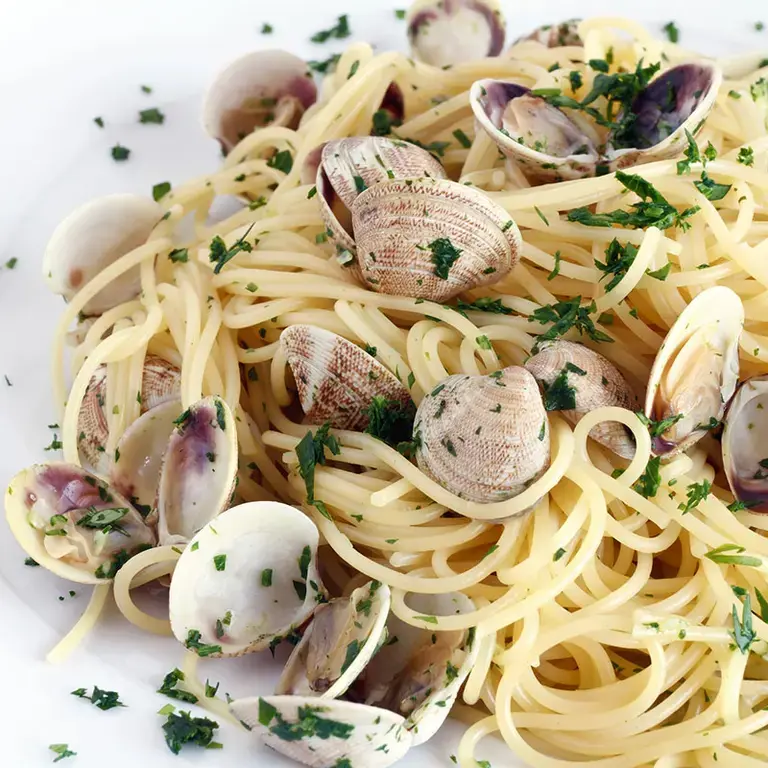

For the best spaghetti alle vongole pasta, use fresh clams and cook them as soon as possible after purchase.
Cooking the garlic gently in olive oil helps to prevent it from browning which can make the finished sauce overly bitter. The pasta should be slightly undercooked when it goes into the pan with the clams, allowing it to absorb the seafood flavour.
The parsley and lemon should be added towards the end of the cooking process, as outlined in the recipe above, to preserve their fresh, delicate flavours.
Choosing and cleaning clams
When choosing clams, look for live clams with tightly closed shells. Discard any that have cracked shells or that remain open after being tapped. They should have a clean, briny smell rather than an unpleasant odour.
Soaking the clams in cold water for around 20 minutes before cooking encourages them to release sand and grit. You can then briefly rinse them under water before cooking.
Common mistakes to avoid
It’s best not to overcrowd the pan with too many clams, as they need space to cook evenly. Use a large, wide pan and cook in batches if necessary. They will only need five minutes once the wine has been added. Avoid salting the sauce before tasting, as clam juice is naturally salty and the pasta water will also contribute seasoning.
Don’t rinse the cooked spaghetti as the starch on the surface helps the clam juices and olive oil to emulsify and coat the pasta. Finishing the pasta in the pan is also key, allowing it to absorb some of the sauce’s flavours without becoming overcooked.
For more seafood and spaghetti dishes, try your hand at a spaghetti alla bottarga, or explore making an elevated version using prawns and lime juice. This tagliatelle ragù bolognese offers another angle on classic Italian pasta dishes, with a hearty pork and beef sauce. You could also explore making your own pasta at home with this strozzapreti recipe.