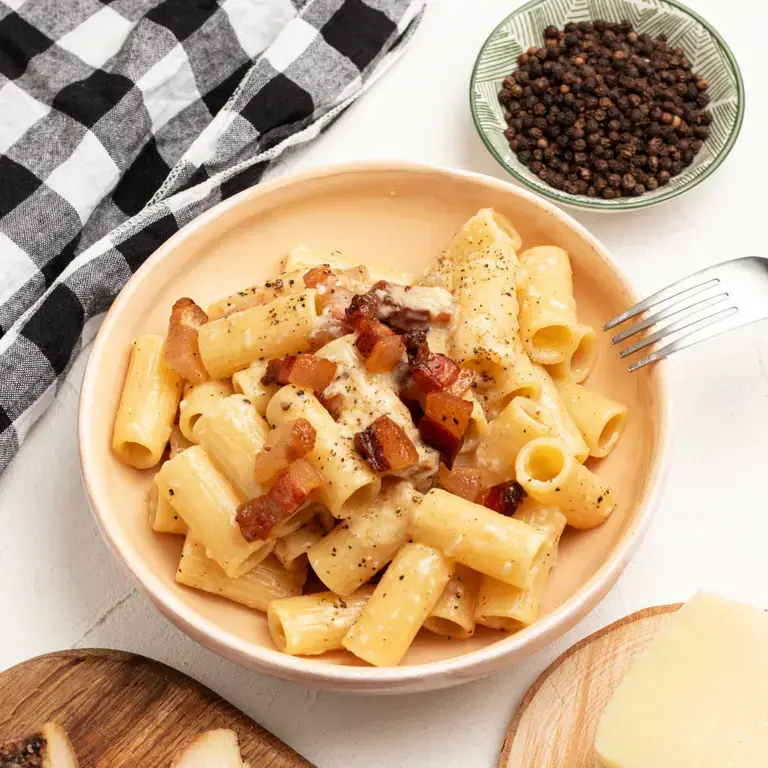

The guanciale needs to be cooked slowly over a gentle heat to allow the fat time to render without burning. Cutting the guanciale into thick lardons helps the meat to retain some of its texture in the finished dish.
The cooking water for the pasta can be lightly salted as both the guanciale and Pecorino Romano are naturally salty ingredients. Pecorino is integral to gricia as it gives the pasta its signature salty and savoury taste profile that defines the dish.
Removing the pan from the heat before adding the cheese prevents it from clumping in the sauce, while creating a cheese paste first, as in the recipe above, helps with the texture too.
Why gricia is called the ancestor of carbonara and amatriciana
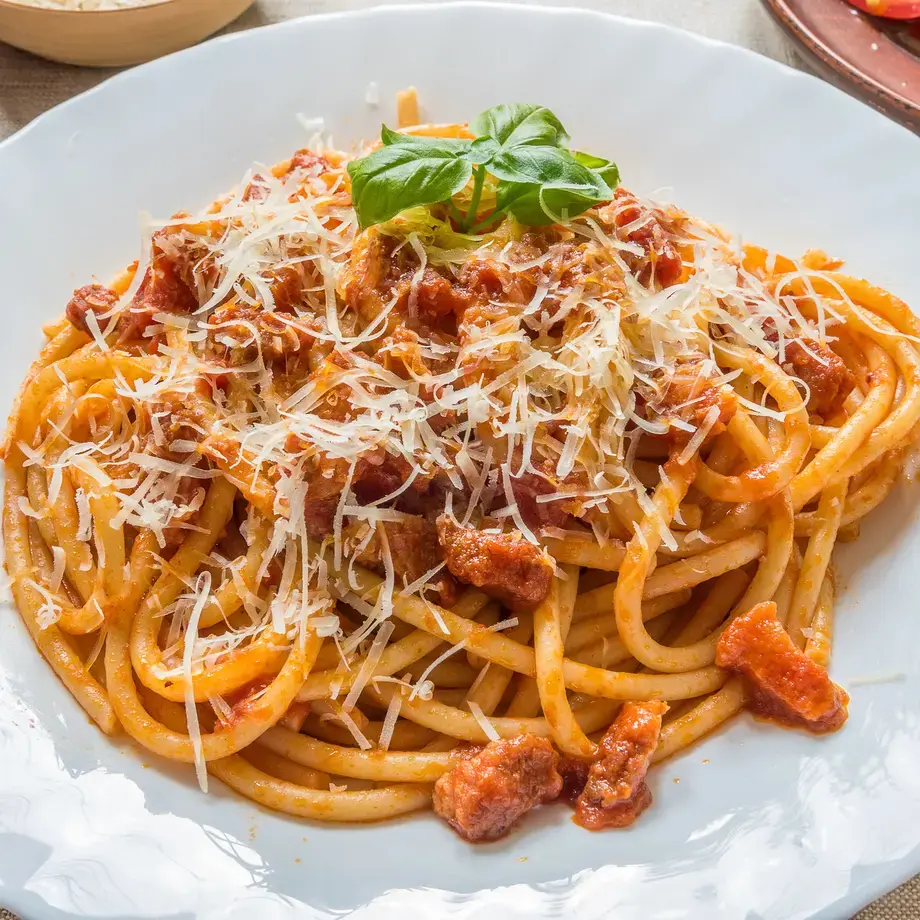
Gricia is often thought of as the precursor to carbonara and amatriciana pasta dishes. When you introduce egg to a gricia recipe, this builds the foundations of a carbonara, and tomatoes transform it into an amatriciana.
The exact origins of all three are debated, though gricia is closely tied to Lazio and central Italy, similar to amatriciana, whereas carbonara’s origins are more widely contested.
Best pasta shapes for gricia
The best pasta for gricia is rigatoni, as its large tubes hold onto the rich, emulsified sauce. Mezze maniche also works well for a similar reason, with short, wide tubes providing plenty of surface area.
Spaghetti can give a lighter feel for an everyday version of the dish, though it's not traditionally associated with gricia.
For more guanciale pasta dishes, try making this foolproof spaghetti carbonara for the perfect plate each time, or make this simple cacio e pepe from chef Riccardo Camanini to use up your Pecorino Romano.