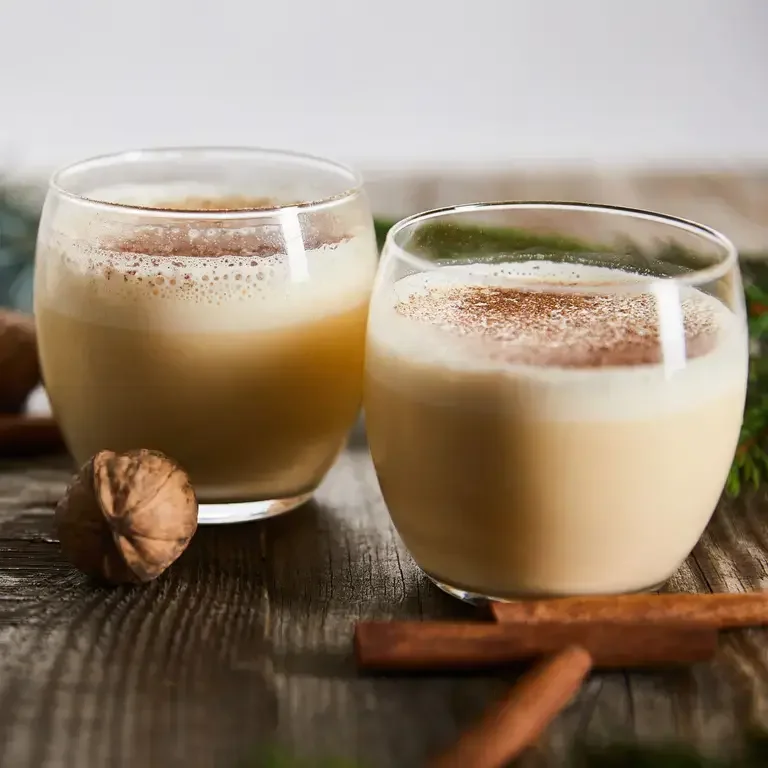

If you’re not familiar with eggnog, it’s a rich, creamy, spiced drink made with a base of eggs, spices and sugar. The classic eggnog taste is custard-like, with sweet spices and warmth and depth from the inclusion of alcohol.
When selecting your eggnog ingredients, make sure you start with fresh, large eggs. These typically will have the richest yolks and create the indulgent creamy base you need for the tastiest eggnog. Caster sugar is the standard sweetener, though you could use alternatives, such as maple syrup or honey, for greater flavour complexity.
Whipping the egg whites and egg yolks separately helps to achieve that signature creamy eggnog flavour, with a light frothy texture, so it’s worth taking the time to separate the eggs for this part of the recipe.
How to make eggnog safely
When making eggnog, you must ensure you’re using pasteurised eggs, as this drink is traditionally made using raw eggs. Pasteurised eggs have been heat-treated to kill off any unwanted bacteria and should be easily available in your local supermarket. For further concerns or information about eating raw eggs, read our helpful guide.
Once you’ve mixed the eggnog, it should be stored immediately in the fridge and enjoyed within three days to minimise any further risks of food-borne illness. Lastly, adding a high-strength spirit, such as brandy, can help to reduce the risks of bacteria in the eggnog.
Alcohol, spice and flavour variations
In the recipe above, we’ve suggested using brandy to bring a fruity depth to the eggnog, as a European take on this popular American festive drink. However, rum also works well with the creaminess of eggnog, adding a slight sweetness to the glass. Or, for whiskey lovers, Bourbon is the ideal choice, contributing rich vanilla notes that pair well with both the eggnog and the nutmeg garnish. Whichever spirit you choose, be aware that the alcohol content will vary from brand to brand.
Any festive spices can be used in eggnog. Cinnamon offers a warming depth, whereas ginger introduces a subtle spicy kick. Citrus adds a welcome brightness to the eggnog and can be easily incorporated using orange zest in the eggnog mixture. Lastly, some chefs will go all out on indulgence, adding ingredients such as grated chocolate, honey or peppermint extract, to enhance this festive treat for Christmas celebrations.
Serving suggestions and storage
Eggnog is best served over ice with a grating of a sweet spice on top to complement the creaminess of the drink. It needs time to chill in the fridge before serving to allow the flavours to combine and develop. It can be stored for around three days in the fridge, but it’s best not to add the egg whites to the mixture if you plan to store the eggnog before serving.
Intended for ages 18+. Please drink responsibly.