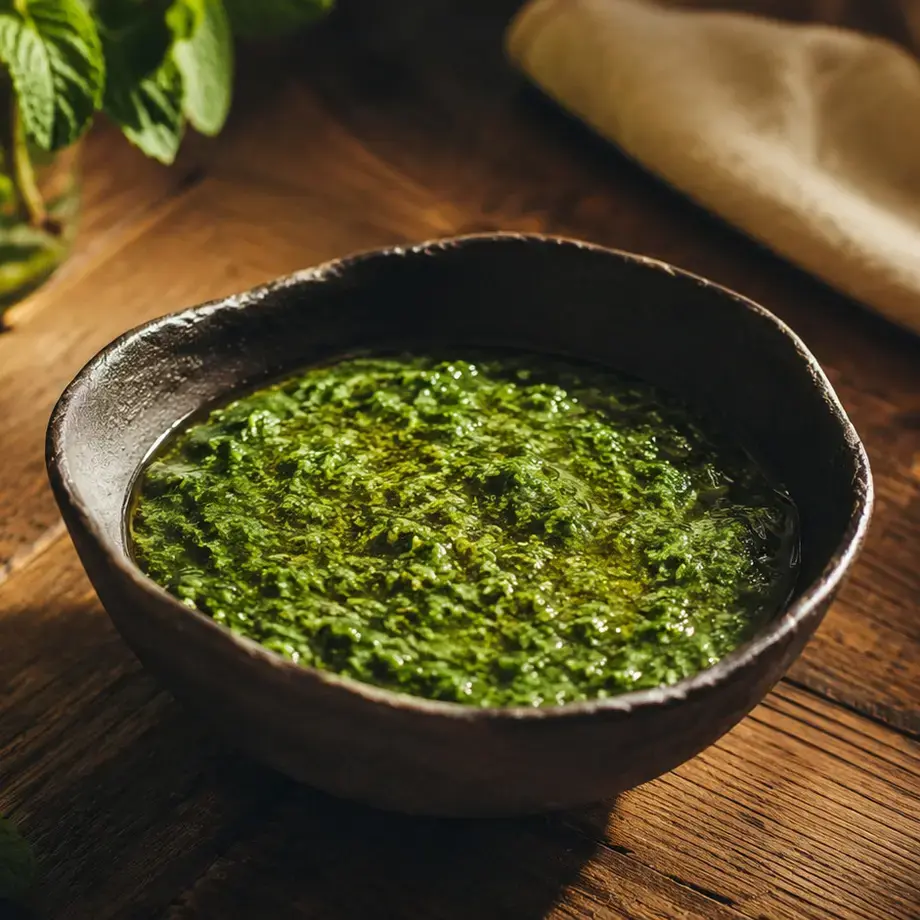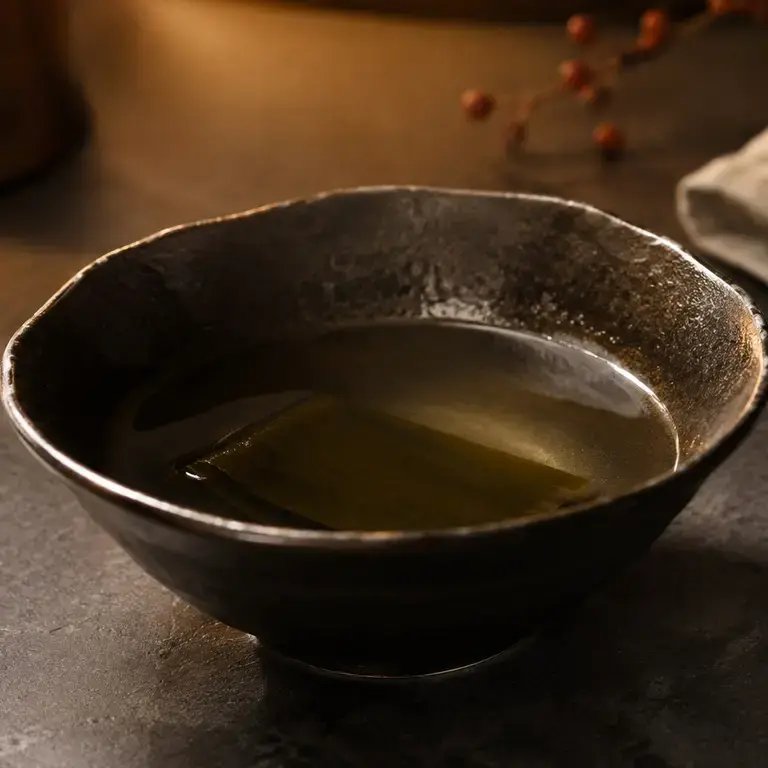

To start, source good-quality kombu. Look for broad, thick pieces with a white bloom on the surface. Avoid rinsing the kombu, as this can remove some of the flavour compounds on its surface. You can also soak the kombu in cold water overnight for a more rounded dashi. Take care not to boil the kombu, as this can extract bitter flavours and turn the stock slimy.
The type of kombu you use will also affect the final dashi. Rishiri, Rausu and Hidaka are among the varieties commonly used in Japan, each offering slightly different levels of umami, sweetness and aroma. The finished stock should be clear and lightly golden, with a savoury, subtly sweet flavour rather than a strong seaweed-like taste.
How to use kombu dashi
Kombu dashi stock can be used in many ways. Miso soup is one of the classic dishes that builds off kombu dashi as a savoury foundation. It’s also commonly used as the base for delicate clear Japanese soups, allowing the subtle umami of the kombu to shine.
Kombu dashi is also found in broths for noodle dishes such as udon, soba and somen, and it can also be used in place of water when cooking rice, adding extra savoury depth.
For more Japanese-inspired recipes, try making the perfect wasabi mayonnaise along with authentic street food-style plates such as takoyaki (octopus balls). Of course, no Japanese feast would be complete without sushi, and you can elevate yours with this crystal sushi from chef Oliver Li, and brush up on your chopstick skills with our useful article on how best to eat sushi.
Storage and reheating
Allow the dashi to cool slightly and transfer immediately to an airtight container to store in the fridge. It will keep for up to three days. You can also add kombu dashi to ice cube trays to create individual portions and store it for up to two months, instead.
To reheat, warm the dashi gently in a saucepan over a low heat. Defrost frozen dashi in the fridge before reheating. If you notice any signs of spoilage, then it’s best to make a fresh batch.