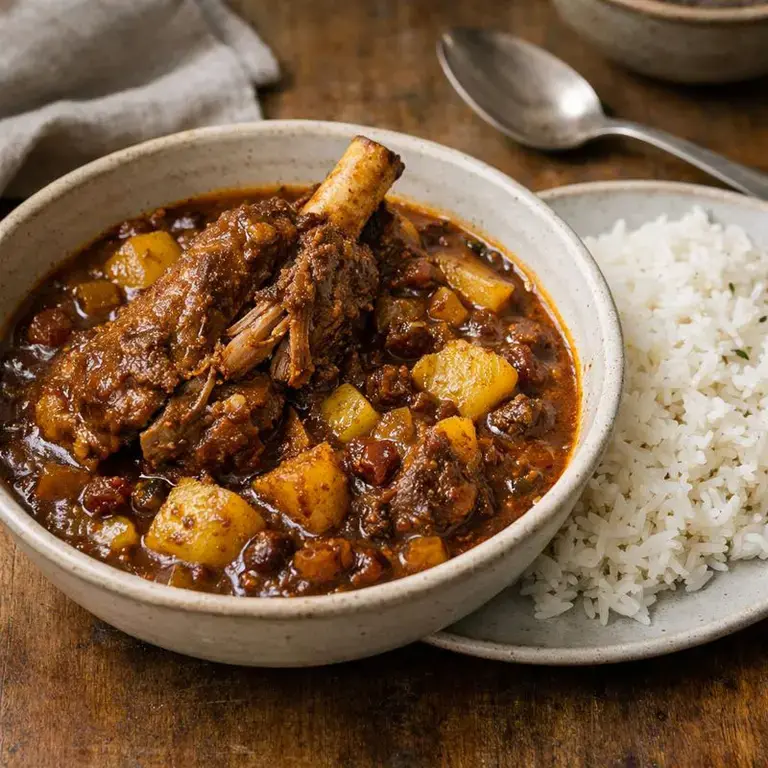

The key to mastering this recipe for lamb curry is not to rush the cooking process. Cuts such as lamb shanks need at least two hours to tenderise and fall off the bone, otherwise you may find the meat quite chewy in your curry. Once it’s tender enough to fall off the bone, you can be sure that it’s ready to eat. Bone-in cuts are also preferable for this recipe, as they add more richness and flavour to the curry. The bones can be easily removed from the curry after cooking.
We’ve recommended using lamb shanks in the recipe above, but you could explore making this recipe with different cuts, depending on your preference. Lamb shoulder or lamb neck also suit the slow-cooking method, with marbling of fat throughout that breaks down during the long time spent in the pan. To find your perfect cut, have a read of our guide to the main popular cuts of lamb.
Any leftover lamb can be used up in many ways, from a light lamb, feta and mint salad to a lamb-stuffed aubergine.
Building flavour in lamb curry
To best build flavour in your lamb curry, start with the basics of what curry is. From country to country and dish to dish, flavour can vary hugely depending on the base ingredients and spices used.
When it comes to developing flavour in lamb curry, it’s important to begin with the base of the onions and garlic cloves to add natural sweetness and depth to the dish. From there, you can evolve the flavour profile depending on your own taste preferences, using a mixture of spices and herbs.
Browning the lamb is a key step to add depth of flavour and irresistible caramelised notes to the curry. Some chefs will even marinate the lamb before browning to help the meat stay tender and pack even more flavour into the pan.
Spice levels and regional variations
The spiciness of lamb curry can vary hugely, from mildly aromatic to fiery hot. In this recipe, we’ve shared a base for a medium heat curry, but if you want to increase the spice levels, an addition such as red chilli powder brings a real kick to the dish.
Throughout India, you’ll find lamb curry variations depending on the region you’re in. In Bengal, for example, ingredients such as tomatoes and ginger are typically added for a subtly sweet take on the recipe. In Southern India, it’s common to find this curry made with coconut milk, bringing a rich creaminess to the plate.
Serving ideas with rice, breads and sides
Lamb curry is best served with a helping of basmati rice to enjoy its flavoursome sauce. It’s also traditional to serve lamb curry with other Indian accompaniments, such as mango chutney, naan bread or even a drizzle of yoghurt over the top to balance the heat of the curry spices.
For wider inspiration outside of Indian cuisine take a look at our round-up of the six top sides to serve with lamb, including charred leeks and grilled courgette.