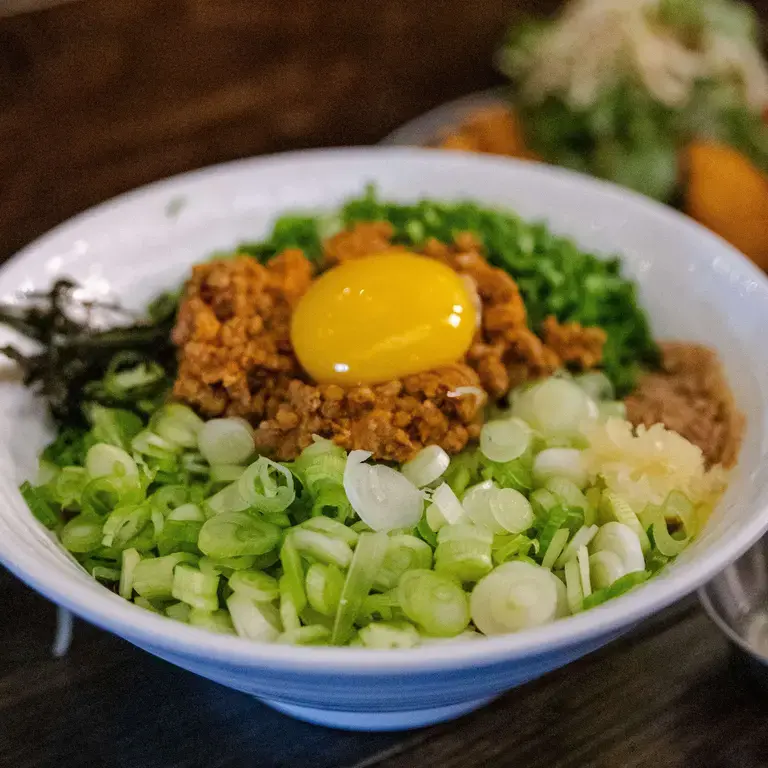

For the best mazesoba, or maze soba, use thick, chewy ramen-style noodles that will hold up to the rich sauce. Drain the noodles well as excess moisture will prevent the oil from coating the strands evenly.
Authentic mazesoba balances rich umami and savoury flavours with sharp acidity, warming spice and pronounced aromatics. Additional ingredients, such as crispy garlic or fried shallots, can also be added to the recipe above to bring a textural contrast to the softness of the noodles and meat.
Mazesoba vs abura soba: what's the difference?
Mazesoba, mazemen and mazeman are terms used for brothless Japanese noodle dishes, with the names broadly referring to noodles that are mixed with their seasonings and toppings. Mazesoba is associated with Nagoya, Japan and tends to have stronger-flavoured garnishes.
Abura soba, on the other hand, means ‘oil noodles’. While it is also brothless, there are key points of difference. This dish originated in Tokyo and tends to be dressed more simply with a soy-based sauce and oil. Vinegar and chilli are also more commonly added to abura soba at the table, instead of being used during preparation.
Both dishes, however, are brothless and feature wheat-based ramen noodles, rather than buckwheat soba noodles, despite their names.
Topping ideas and variations
Pork is the traditional meat for this dish, but there are also variations using minced beef, chicken, or even plant-based mince. A raw egg yolk gives this recipe its signature richness, but make sure you only use pasteurised eggs and follow UK food-safety guidance if adding this topping to the bowl.
Fresh garlic, spring onions, ginger and shallots can all be added and some chefs will introduce broken pieces of nori seaweed to the dish to intensify the umami note alongside the traditional bonito flakes.
There’s even a style called Taiwan mazesoba that was, confusingly, invented in Japan. It features thick, chewy wheat noodles, with spicy minced pork, nori, raw garlic and fish powder.