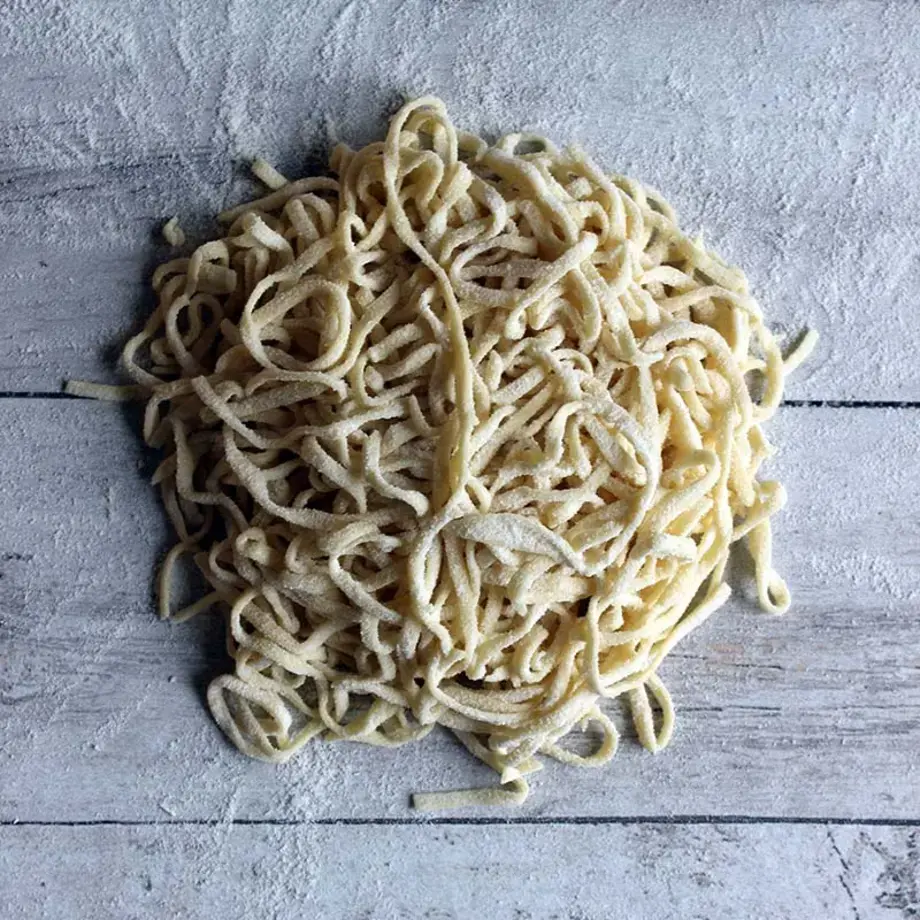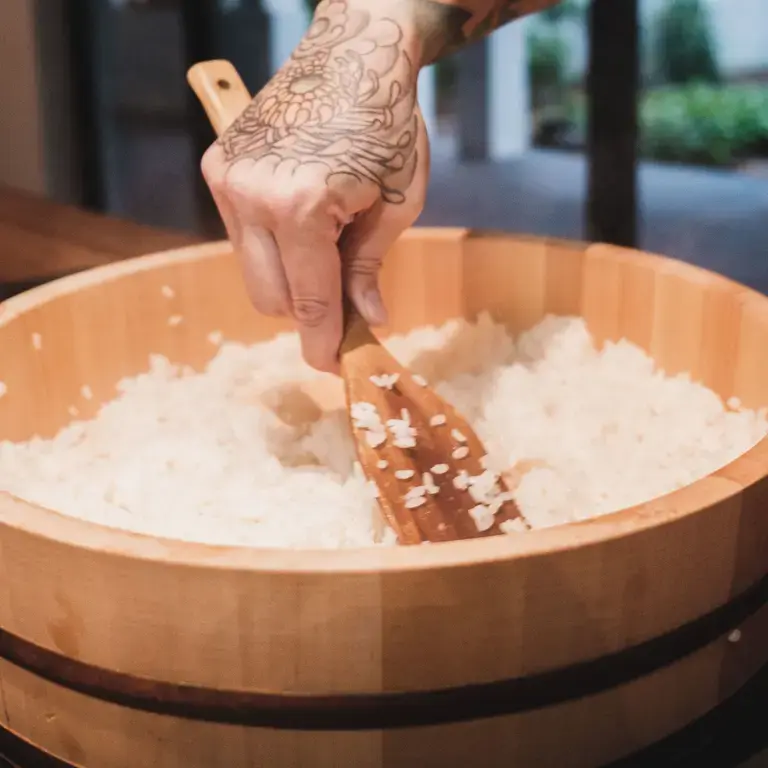

Rinsing sushi rice thoroughly removes excess surface starch, helping to prevent a gummy texture. It also needs a little less water than long-grain rice, which you may be more familiar with cooking, so it’s best to stick closely to the ratio outlined in the recipe above.
Keep the lid firmly on the saucepan while the rice cooks and avoid lifting it to check on the grains. Removing the lid allows steam to escape and can affect the cooking process. Once cooked, leave the rice covered to rest and steam before seasoning.
For more guidance, see our article on how to eat sushi, including tips on using chopsticks.
Ways to use sushi rice
Sushi rice can be used in a variety of ways. Nigiri is a classic form of sushi, featuring small, hand-shaped portions of sushi rice topped with sliced raw or cooked fish. Maki rolls are another popular style, combining sushi rice and fillings, such as fish and vegetables, wrapped in nori seaweed.
For a more casual meal, use sushi rice as the base for a bowl with ingredients including salmon, tuna, avocado, cucumber, edamame and sesame seeds. It can also be used in contemporary dishes such as sushi sandwiches, which bring together seasoned rice and nori with a variety of fillings.
The history of sushi rice
Sushi was developed as a means of preservation, where fish was packed in cooked rice and allowed to ferment. The rice was discarded afterwards. Over time, cooking techniques were developed that shortened fermentation, and vinegar-seasoned rice came to be used to reproduce the acidity associated with fermentation without requiring the same lengthy process.
What is recognised today as sushi developed in Japan, with nigiri sushi emerging in Edo, now Tokyo, during the 19th century. The style used fresh fish from Tokyo Bay and was designed as a convenient form of food that could be eaten by hand. As sushi evolved, seasoned rice became an integral part of the dish. It then spread globally in the 20th century, with sushi rice becoming a versatile ingredient with uses far beyond traditional sushi.
For other Japanese-inspired dishes, try making classic miso soup with tofu or takoyaki ‘octopus dumplings’. Of course, no Japanese feast would be complete without a serving of wasabi mayonnaise, which can be easily made at home. If you’re feeling adventurous, chef Oliver Li has developed a crystal sushi dish that’s ideal for an elegant dinner party.