
Durian inspires devotion and debate in equal measure. This guide explains what it is, how it looks, smells and tastes, the best way to open and eat it, and how to present it in refined preparations that respect its singular personality.
What durian is and where it comes from
Durian is the oval, thorned fruit of several species in the genus Durio, grown across Southeast Asia. It is celebrated in Malaysia, Thailand, Indonesia and the Philippines, and appears in markets from Singapore to Ho Chi Minh City during peak season. Often called the "king of fruits", durian is prized for its rich, custard-like flesh and deeply aromatic profile. It is not the same as jackfruit: while both are spiky tropical fruits, jackfruit is larger, drier and more fibrous, with a very different flavour.
How durian looks, smells and tastes
Whole durian is heavy, football-sized and encased in a green to brown husk covered with stout spikes. Inside, pale yellow to deep gold lobes of soft flesh sit in fibrous chambers. The aroma is distinctive and intense – creamy, savoury-sweet and slightly sulphurous – often compared to ripe cheese, toasted nuts and tropical caramel.
On the palate, the texture is dense and custard-smooth, with flavours that can suggest almond, vanilla, caramelised banana and a faint allium warmth. Ripeness matters: underripe fruit tastes firmer and less complex; very ripe fruit becomes richer, softer and more pungent.
How to choose, open and prepare durian
Choose fruit that feels heavy for its size, with a gentle fragrance rather than an overpowering odour, and spikes that are firm but not razor-sharp. A slight give where the seams meet can indicate readiness. To open safely, set the fruit on a stable board, wear cut-resistant or thick kitchen gloves, and insert a sturdy knife tip into the natural seam at the base.
Lever gently until the husk splits, then pull along the seams by hand to reveal the chambers. Lift out each lobe with a spoon to avoid bruising. Discard the husk and seeds responsibly, and work in a well-ventilated area to keep aromas pleasant.
How to eat durian and refined serving ideas
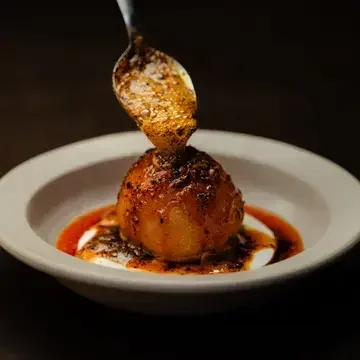
At its best, durian is eaten simply, slightly chilled, with a small spoon. For a fine-dining approach, serve neat portions in chilled dishes with a contrast of temperature and texture – think shaved ice, coconut granita or lightly salted roasted macadamias. A squeeze of calamansi or lime brightens the richness; a pinch of sea salt sharpens definition. For a composed plate, pair small quenelles of durian with fingers of crisp coconut tuile, thin coins of palm sugar jelly and a few leaves of Thai basil for lift.
Culinary uses, pairings and recipe inspirations
Durian’s high fat content and custard texture suit chilled desserts and gentle heating rather than prolonged cooking. Consider parfaits set with a light gelatine, semifreddo folded with whipped cream, or a crèmeux layered with coconut dacquoise. In pastry, contrast sweetness with bitter chocolate shards or black sesame crumb for depth.
For drinks, durian milkshakes or affogato-style pours with darkly roasted coffee can work if sweetness is tightly controlled. Savoury experiments are possible but should be restrained – tiny accents with blue cheese, young goat’s cheese or roasted onion in a tasting menu can echo its lactic and allium notes without overwhelming.
Storage, seasonality and etiquette tips
Durian is seasonal, with peak availability varying by region; quality is highest when the fruit is fresh from nearby orchards. Store whole fruit cool and ventilated, and keep prepared lobes in an airtight container in the refrigerator for up to two days. Avoid strong odour transfer by sealing well and chilling promptly.
Many hotels and public transport systems restrict durian, so check local rules when travelling. For service at home, warn guests in advance, offer alternatives for those who prefer gentler flavours, and present durian as a small, intentional course – a respectful way to showcase one of the world’s most distinctive fruits.