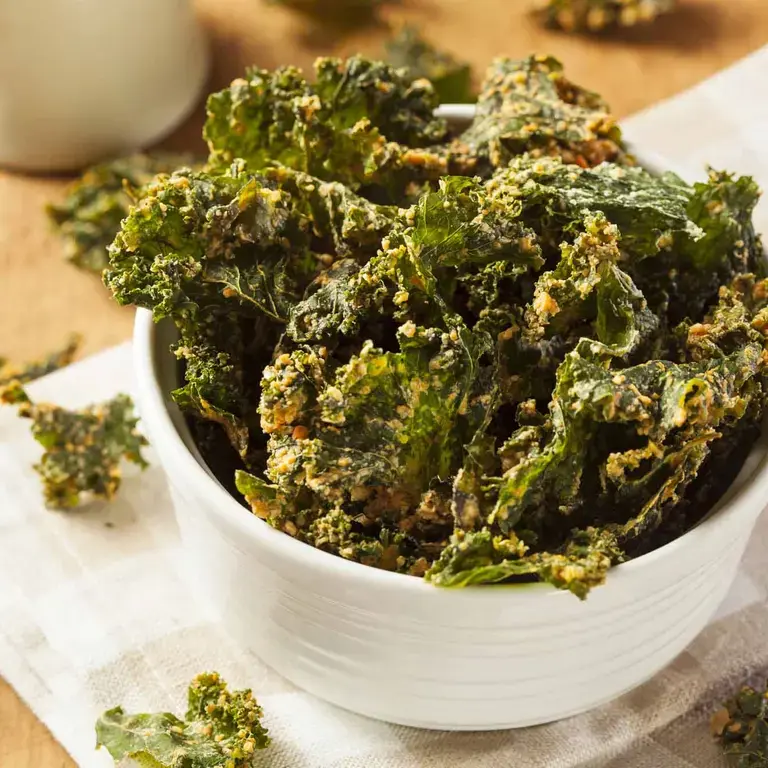

When making kale crisps you need to choose the right variety of kale to create that crispy texture. Look for types, such as curly kale, that will produce that desirable crunchy texture. The kale also needs to be fresh and dry. Any wilting leaves or leftover moisture from rinsing will stop the kale from crisping up in the oven.
It’s important not to skip the step of washing the leaves, however, as fresh kale often harbours residual dirt and grit. If you have a salad spinner, this is a handy kitchen utensil to ensure the leaves are as dry as possible after rinsing through.
Kale is part of the cabbage family; for more inspiration on how to cook with different types of cabbage, such as pak choi, take a look at our helpful article.
Seasoning variations
In the recipe above, we’ve shared a simple seasoning including a spicy kick. But there are endless ways to season your crisps. Salt and vinegar kale crisps are another popular flavour combination, where the vinegar can be added to the kale after cooking, just as you would with traditional crisps. Alternatively, you can introduce citrus elements, such as lemon zest, to brighten the taste of the kale.
Kale also works well with classic seafood ingredients such as prawns; you can try twisting this spicy garlic prawns recipe by adding your kale crisps to the bowl instead.
How to store kale crisps
Any leftover kale crisps can be stored in the fridge in an airtight container and will keep for up to two days in the fridge. Store the kale with a kitchen towel to draw any excess moisture away from the kale and prevent the cabbage from becoming soggy. Kale crisps can be easily reheated in the oven at a high heat for five minutes.
Common mistakes to avoid
When cooking kale crisps there are a few key tips to know for optimal results. Firstly, take care to remove any tough stems, as these will remain chewy even after cooking. As outlined in the recipe above, it’s best to tear the kale leaves into even-sized pieces so they cook at a similar rate in the oven.
Some chefs will often skip the step of massaging the oil into the leaves, so they’re simply coated instead of fully drenched in the oil. The massaging, however, helps to prevent the kale from becoming excessively soggy and is an important step.
Be careful not to add too much salt to the tray, regardless of the other seasonings you intend to use. Too much salt will cause the kale to shrink – you only need a pinch or two to bring out the flavour.