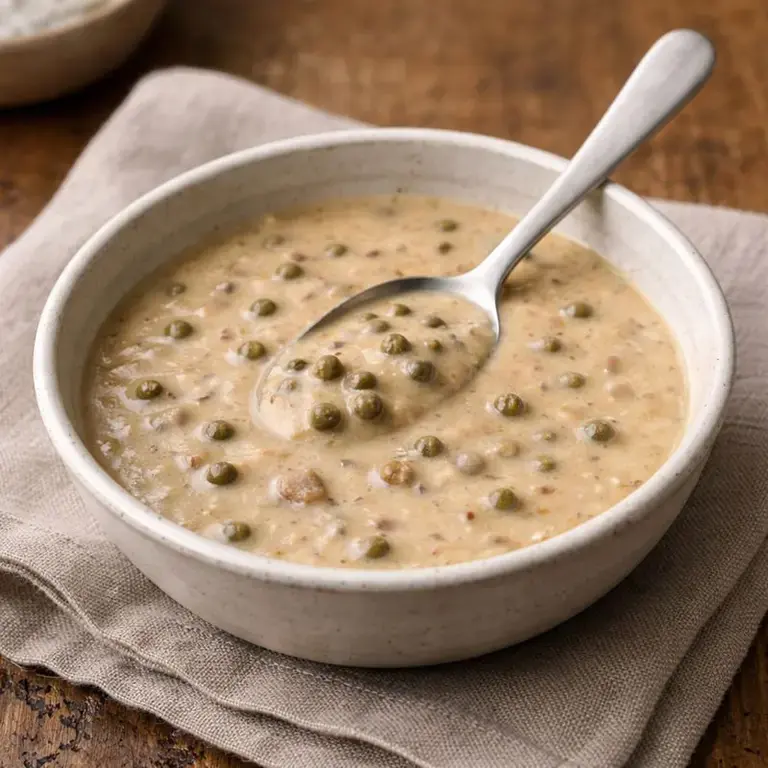

To create the tastiest sauce you need to start with sautéing the aromatics. From there you can build the flavour. A peppercorn sauce is known for its slightly thick texture, which you can achieve through reducing the sauce as outlined in the recipe above. This takes a little time to get the texture just right, but it’s worth doing for the best outcome and to help concentrate the flavours of the ingredients.
Some chefs will even add a splash of brandy to the mix, to brighten the sauce and introduce a little acidity to balance the flavours. Or, if you’d prefer not to use alcohol, a squeeze of lemon juice offers a similar acidity and brightness.
Choosing peppercorns and aromatics
When making homemade peppercorn sauce, it’s worth considering the types of peppercorns you plan to use, as different varieties will affect the final flavour. Black peppercorns, which you may be more familiar with, bring bold heat to the sauce. Green peppercorns, as we’ve suggested using in this recipe, are slightly milder and fresher, creating a sauce that can be used more universally.
You could also opt to use a mixture of peppercorns to make the most of the styles available. For more guidance on which peppercorns to use, take a look at our helpful article outlining six of the main types to know.
Cream, stock and balance of richness
It’s easy enough to make a peppercorn sauce, but there are a few key steps to follow to perfect it. The cream is important for that signature richness and must be added towards the end of the cooking process over a low heat to avoid it splitting in the sauce.
Stock helps to concentrate the flavours of the sauce; we’ve recommended using beef stock in the recipe above. This helps to balance the richness of the ingredients without overpowering the peppercorns that need to come to the fore.
Lastly, adding red wine to the recipe deglazes the pan, loosening any browned bits that may be stuck to the bottom after sautéing the aromatics. These elements often hold the most desirable and concentrated flavours, and if you can take the time to follow this step, you’ll be able to taste the difference in your final sauce.
Serving suggestions and make-ahead tips
There are lots of dishes to enjoy with this condiment. Peppercorn sauce for steak is a common pairing, as it enhances and complements the juicy richness of the meat. It also works well with chicken dishes, such as roasted chicken breasts, and adds a touch of luxury to simple side dishes like roasted potatoes or grilled vegetables.
The sauce can be made ahead of time and stored in an airtight container in the fridge for up to three days. When you’re ready to use the sauce, it can be gently reheated in a pan, and a dash of additional cream or stock helps to loosen it up again.
Once you’ve made this recipe, there’s a whole world of fine-dining sauces to explore and add to your repertoire in the kitchen, from hollandaise for breakfast dishes to sweet and sour for Asian cooking.