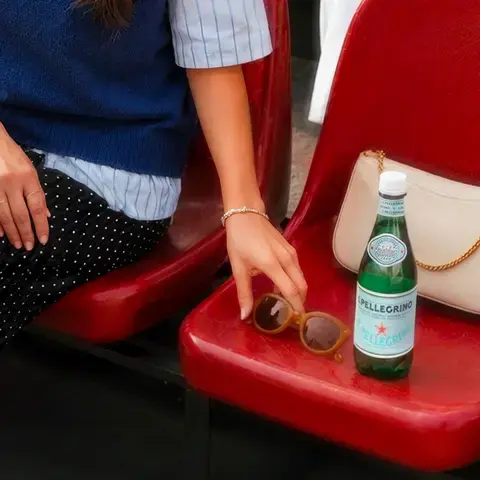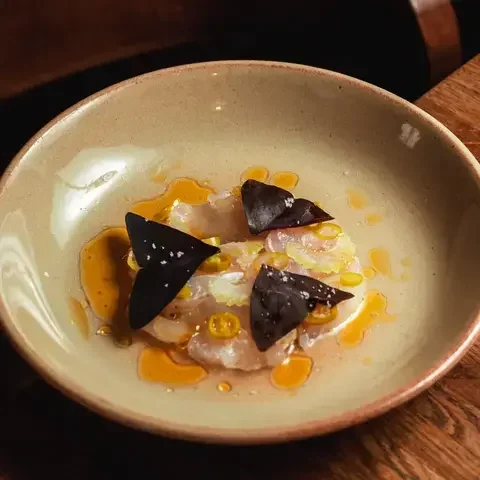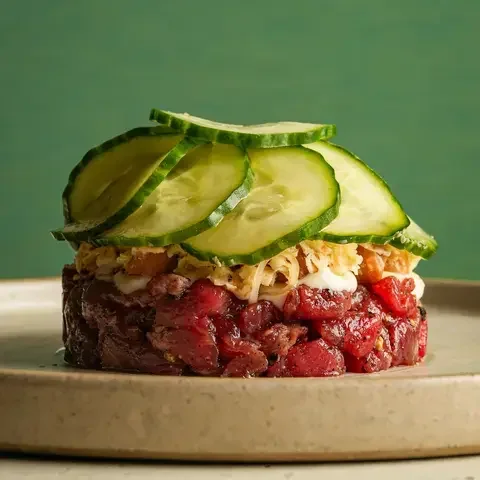
At the restaurant chosen by S.Pellegrino as the set for the next chapter of the Bring Your Best campaign, Lewis Hamilton sits at a table with three long-time friends. The conversation flows like the water in their glasses: no script, no stiffness, just friends sharing dishes and stories emerging spontaneously, one after another.
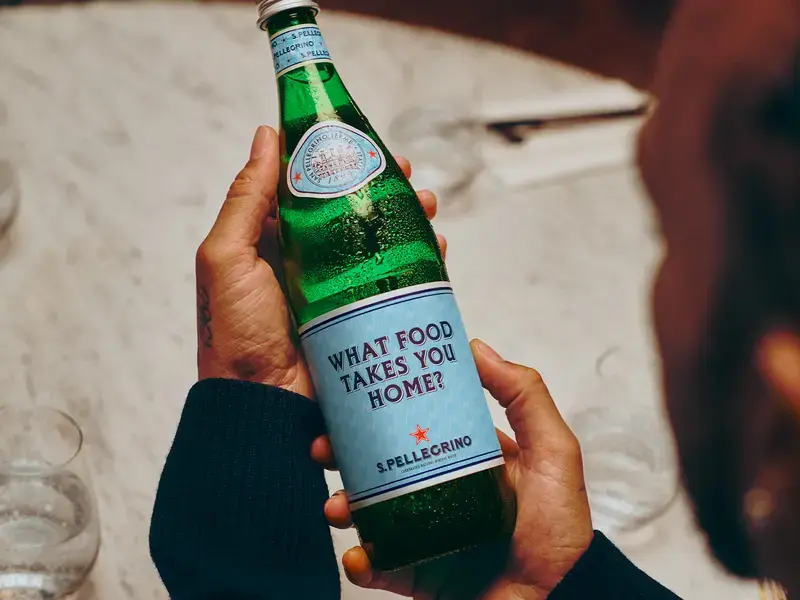
This is where the heart of the campaign takes shape: a table where a bottle of S.Pellegrino becomes the starting point for something more. On the label, unexpected questions encourage thinking outside the box and open up authentic conversations full of memories, humour and unexpected moments.
And Lewis, between bites, sips and laughter, is its natural catalyst.
Italy, according to Lewis
Among the stories that emerge, one has a hint of nostalgia. Lewis looks back to when he was 14, in Italy, at the very start of his career.
He describes a house that looked straight out of a film (“Almost like a castle, it looked like Dracula might live there,” he says verbatim) and a lasagne prepared by his mechanic’s family. It was the best of his life and impossible to find again. A simple memory, yet rich in the kind of authenticity only food and shared company can provide.
Also on a culinary note, Lewis jokes about one of his first Italian “culture shocks”. Whenever he asked for something light, maybe a salad, the response was often… a choice between pizza or pasta. “I’d ask for a salad and they’d look at me as if to say: what even is a salad?” he says, smiling. An anecdote that immediately sparks laughter and conversation around the table, and captures better than any guide the passionate and bold character of Italian cuisine.
His first “business” at school
For Lewis, though, food has always been something deeply practical. Between jokes, a childhood memory resurfaces saying more than it might seem.
At school, he didn’t like the lunch he brought from home: too soggy and not very appealing. So he found his own solution: he sold it to his classmates. With the money, he bought sweets, turning an everyday problem into a small opportunity. A simple, almost instinctive gesture which, today, feels like the first sign of a mind trained to always find a way out.
The mystery meat
The conversation then shifts to high-pressure eating habits. Lewis recalls, with a smile, the kebabs he ate as a teenager. “We had no idea where that meat came from,” he says, as someone at the table comes up with the perfect definition: “mystery meat”.
Laughter all around, and that shared sense of lightness that only certain memories carry, reminding you how taste matters more than anything else.
From cooking… to kitchen disasters
If Lewis is a curious observer at the table, in the kitchen, he knows his limits.
His signature dish? Fajitas. But with one important detail: a readymade kit. And when he tries to go further, the result is memorable, but not in a good way. “It was so bad even the dog wouldn’t eat it,” he says of one kitchen disaster, amid general laughter.
A moment that breaks down all distance and reveals a very different Lewis from the one on the racetrack: self-deprecating, spontaneous, human.
An (overly) expensive date
Among the most candid anecdotes is the story of a youthful date that ended in a spiral of panic.
Lewis remembers taking a girl to a restaurant far beyond his means. She orders without hesitation – dishes, wine, more dishes – while he, across the table, starts doing the maths. At one point, he gets up, goes to the bathroom, and calls his mum: he’s not sure there’s enough money on his card. “I was sweating; I was almost thinking of running away,” he admits with a laugh. In the end, he managed to pay, but the memory lingers, more of the anxiety than of the evening itself.
Pure adrenaline (even at the table)
Then, as often happens in conversations among friends, the tone shifts from light memories to more intense ones.
Lewis recalls a trip to Madagascar, a helicopter hanging over the water, and a sudden decision: to jump. But not an ordinary leap. You have to open the door and “step out”, avoiding the blades and the sharks below. It’s one of those moments when the fear is real. But it’s also what attracts him.
Because, as he explains, putting himself in uncomfortable situations is a way to test himself and not let fear make the decisions.
A story that goes back a long way
This attitude, after all, is nothing new. Lewis says that as a child, he would climb anything, fall from trees, and constantly test his limits. So much so that one day, his father jokingly asked his mother: “Are you sure he’s my son? He’s mad.”
The table erupts in laughter. But behind the joke, it’s all already there: the drive, the courage, that natural inclination to push boundaries.
Conversation as experience
As dishes arrive and glasses are refilled, time passes unnoticed. The conversation flows through food, travel, music, fears and dreams. There’s laughter, interruptions and overlapping voices. And it is precisely in this fluidity that the heart of the experience takes shape: the table is not just a place to eat, but a space where stories come to life.
S.Pellegrino puts it this way: as a moment that brings people together, surprises and creates genuine connections.
And watching Lewis relive memories of perfect lasagne, childhood tricks and dates best forgotten, the reason becomes clear: the best conversations aren’t built. They just happen. And often, they begin just like this, around a table.