Beer is a world of style and structure, from crisp, mineral lagers to layered, hop-bright ales and contemplative dark beers poured for slow sipping. This guide clarifies how styles are defined, how flavour is built, and how to serve beer elegantly alongside food.
What defines a beer style?
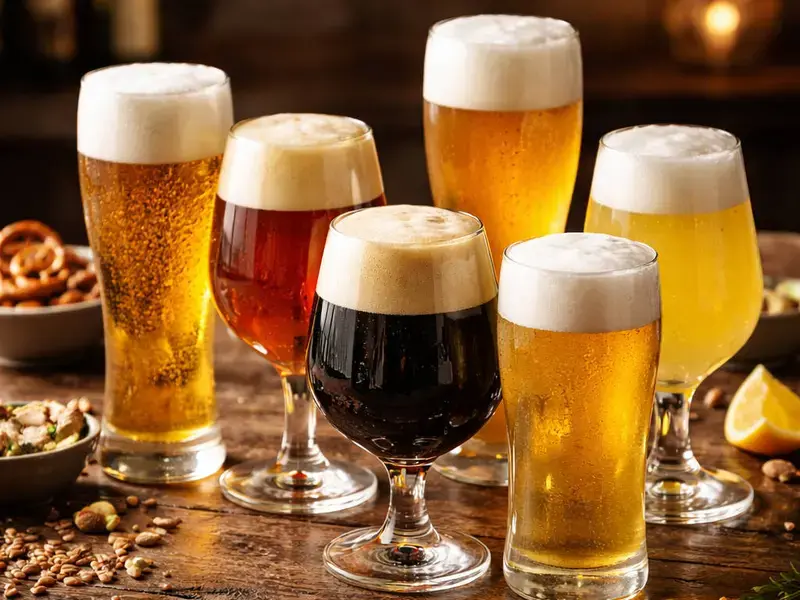
A beer style is shaped by four pillars: ingredients, fermentation, conditioning and presentation. Malt determines body, colour and biscuity to roasted flavours; hops set bitterness, aroma and length; yeast drives fermentation character, from clean to fruity or spicy; water chemistry fine-tunes mouthfeel and bitterness. Serving format, carbonation and typical glassware also help define a style, as do ABV ranges and traditional origins.
Main families of beer: ales and lagers
All beers ferment as either ale or lager.
Ales ferment warm with top-fermenting yeast, developing fruit-forward esters and spice in styles such as pale ale, IPA, porter and stout.
Lagers ferment cool with bottom-fermenting yeast, then condition cold for clarity and crispness, spanning pilsner, helles, Vienna and dunkel. Hybrid approaches exist, but the ale-lager divide remains the clearest gateway to style.
Classic beer styles, from pale ales to stout
Pale ales and IPAs lean on hop aroma and bitterness, from citrus-pine West Coast profiles to softer, hazy expressions with tropical notes.
Amber and brown ales emphasise caramel and nut tones with moderate bitterness.
Porter and stout pivot to roasted malt, cocoa and coffee.
Wheat beers bring silkier texture and notes of clove or banana in hefeweizen, or zesty freshness in Belgian witbier.
Pilsner and helles are crisp lagers with noble hop perfume and fine bitterness, ideal as aperitif-style serves.
For language that helps you capture these differences with precision, see our guide on how to describe beer like a professional.
Trappist, lambic and other speciality styles
Trappist ales are monastic beers brewed under the supervision of Trappist communities, ranging from golden and tripel to darker dubbel and quadrupel, often with firm carbonation and complex spice-fruit interplay.
Lambic and gueuze are spontaneously fermented Belgian beers, matured in oak with bright acidity, hay-leather nuance and, in fruit lambics, focused cherry or raspberry tones.
Sour, farmhouse and wild ales explore mixed cultures and rustic grains for vivid acidity and texture.
At the other end of the spectrum lie extreme-strength specialities and limited releases; for context on potency and balance, consult our round-up of the strongest beers in the world.
How to taste beer and read flavour profiles
Taste in three passes.
- First, assess appearance and aroma: colour, clarity, head retention, then hop, malt and yeast notes.
- Second, take a small sip and hold for texture: carbonation level, body and sweetness–bitterness balance.
- Third, note flavour evolution and finish: do hops linger, does roast tighten, does acidity refresh?
Professional vocabulary and structured tasting can sharpen notes for service and training; our guide to describing beer like a pro offers a useful framework.
Beer and food pairings for elegant menus
Match intensity first, then choose a strategy: complement, contrast or cut.
- Pale ale with grilled shellfish or lightly spiced canapés complements citrus-hop brightness.
- Pilsner cuts through fried snacks and tempura with crisp bitterness and fine carbonation.
- Wheat beer flatters soft cheeses and citrus-herb salads with its gentle spice and silk.
- Amber ale mirrors roasted poultry and root vegetables with caramelised malt.
- Stout partners oysters by contrast, and desserts by complement, echoing coffee–cocoa notes.
For the sweet course, pairing is entirely possible – from fruit-led lambic with tart desserts to nutty brown ales with caramel and pastry – and our primer on the art of matching beer with desserts outlines principles and examples to guide your menu.
Whether you are clarifying the difference between ale and lager, identifying where stout sits, or choosing between a Trappist and a lambic, an organised approach to style and flavour will help you pour with confidence and pair with precision.