Horseradish may look unassuming, but its flavour tells another story – sharp, peppery and instantly recognisable. This ancient root vegetable has been cultivated for centuries across Europe and Asia, prized for its ability to cut through richness and awaken the palate. From classic roast beef accompaniments to delicate emulsions in modern cuisine, horseradish remains a symbol of bold simplicity and craftsmanship in flavour.
What is horseradish and where does it come from?
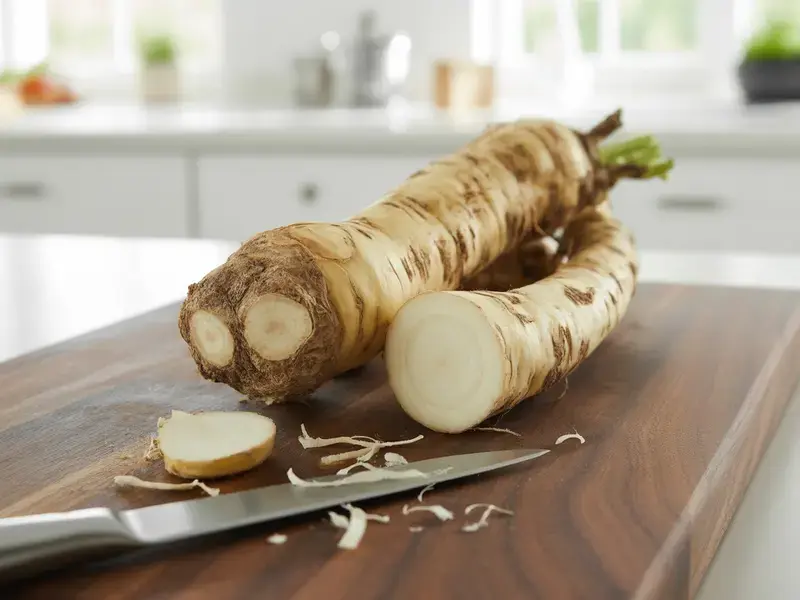
Horseradish (Armoracia rusticana) is a perennial plant belonging to the same family as mustard and wasabi – the Brassicaceae. Native to southeastern Europe and western Asia, it has long been valued both as a condiment and for its medicinal properties. The part most commonly used in cooking is the long, tapering root, which, when grated, releases a sharp, volatile heat that quickly dissipates.
The plant’s leaves are also edible, although less commonly used. Young horseradish plant leaves can be treated like mustard greens or spinach, bringing a mild pepperiness to salads or sautés. However, the real power lies underground: in the root, the intensity of which defines the ingredient’s character.
When comparing wasabi vs horseradish, it’s worth noting that what’s sold as wasabi outside Japan is often a mixture of horseradish, mustard and green colouring. True wasabi root, or Wasabia japonica, has a more delicate, vegetal heat. Horseradish, by contrast, delivers a stronger, longer-lasting pungency, ideal for hearty European preparations.
Types of horseradish and how they differ
Fresh vs prepared
Fresh horseradish is the purest expression of the root’s character. The white flesh should be firm, unblemished and heavy for its size. When grated, it releases an immediate heat that fades after a few minutes, so it’s best used straight away. Exposed to air and heat, its volatile oils oxidise quickly, losing their intensity.
Prepared horseradish, on the other hand, is a preserved version made by combining freshly grated root with vinegar, salt and sometimes sugar. The vinegar stabilises the flavour, prolonging its shelf life and slightly mellowing its heat. It’s the most common form found in jars and used in sauces or condiments, offering consistency and convenience.
White vs red horseradish
White horseradish refers to the standard preparation seasoned only with vinegar and salt, often served with roast beef or smoked fish. Red horseradish includes beetroot, which lends a rosy hue and a sweeter note. Popular in Eastern Europe, particularly in Polish and Jewish traditions, this version balances the root’s intensity with an earthy sweetness, creating a condiment that complements cured meats, gefilte fish or smoked salmon.
Both types retain horseradish’s trademark pungency, though red horseradish tends to be slightly milder due to the addition of beetroot.
How to use horseradish in the kitchen
Horseradish is a versatile ingredient that adds contrast and vibrancy to a wide range of dishes. Used sparingly, it enhances without overpowering, bringing balance to creamy, fatty or subtly sweet elements.
Classic pairings
Traditionally, horseradish is paired with roast beef, lamb or smoked fish – foods whose richness benefits from a sharp counterpoint. It’s also common in Northern and Eastern European cuisines, where it accompanies cold meats, sausages or pickled vegetables.
In modern cuisine, chefs use it to enliven seafood dishes such as oysters, scallops or crab, where its heat cuts through brininess while maintaining freshness. It can also be incorporated into mashed potatoes, mayonnaise or whipped cream to create a gentle heat that lingers elegantly on the palate.
Horseradish in sauces and dressings
One of the most popular uses of horseradish is in creamy sauces. A classic example is horseradish cream, where prepared root is blended with sour cream or crème fraîche to produce a rich yet piquant condiment. It’s ideal for steak, salmon or vegetable crudités.
In vinaigrettes and dressings, a small amount of freshly grated horseradish provides brightness and a peppery edge. It pairs particularly well with beetroot, celery root and apple, creating a refined balance between sweetness and spice.
Chefs also experiment with horseradish foams or emulsions, using its volatile heat to add aroma and excitement to fine-dining dishes. A touch of horseradish purée alongside oysters or in a cold soup can elevate the experience from rustic to sophisticated.
How to prepare horseradish at home
Working with fresh horseradish requires care – and perhaps a well-ventilated kitchen. Start by peeling the root thoroughly and cutting it into small chunks. Grate or process it in short bursts, avoiding direct inhalation of the fumes, which can be intense. Immediately add a splash of vinegar to stabilise the flavour and prevent browning. The sooner vinegar is added, the milder the result; wait a few minutes for a hotter effect.
For homemade prepared horseradish, combine one part grated root with one part vinegar, a pinch of salt and a small amount of sugar if desired. Store in a sterilised jar in the refrigerator, where it will keep for several weeks.
To create a smooth horseradish sauce, blend the prepared mixture with double cream, yoghurt or mayonnaise, adjusting to taste. The sauce should be creamy and tangy, with a balance between the root’s bite and the richness of the base.
Fresh horseradish can also be frozen in small portions for future use, though it loses some potency once thawed. When using it raw, remember that less is more – a small amount can transform a dish.
Whether served alongside smoked trout, stirred into a velvety sauce or used as a finishing note for raw beef carpaccio, horseradish adds personality and precision to the plate. Its boldness, when handled with restraint, becomes not just a source of heat but an instrument of balance – the mark of a confident cook and a timeless ingredient.