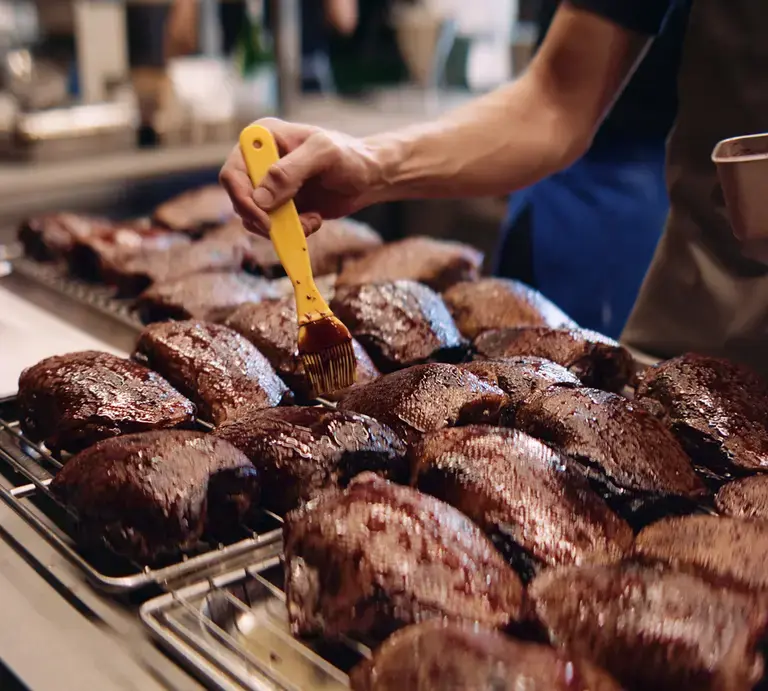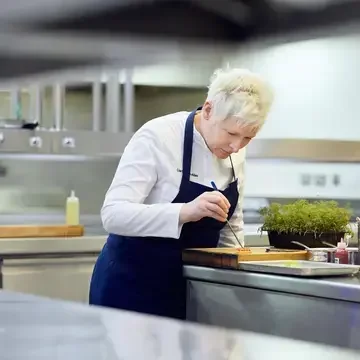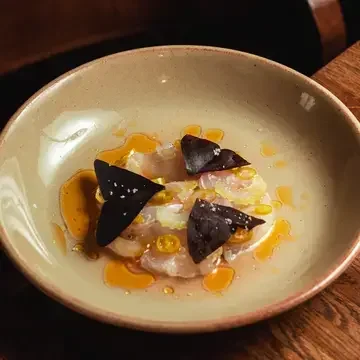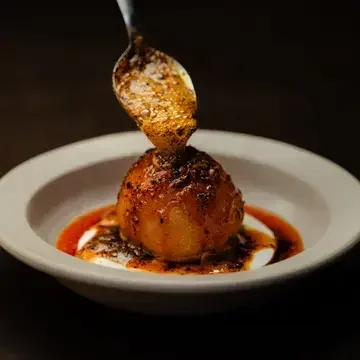
Fire was humanity’s first cooking tool, but mastering it remains one of a chef's most complex challenges. It’s not enough to simply place an ingredient on the grill: you need to gauge the temperature, choose the wood, interpret the smoke and know when to move the food closer to, further away from or remove entirely from the embers.
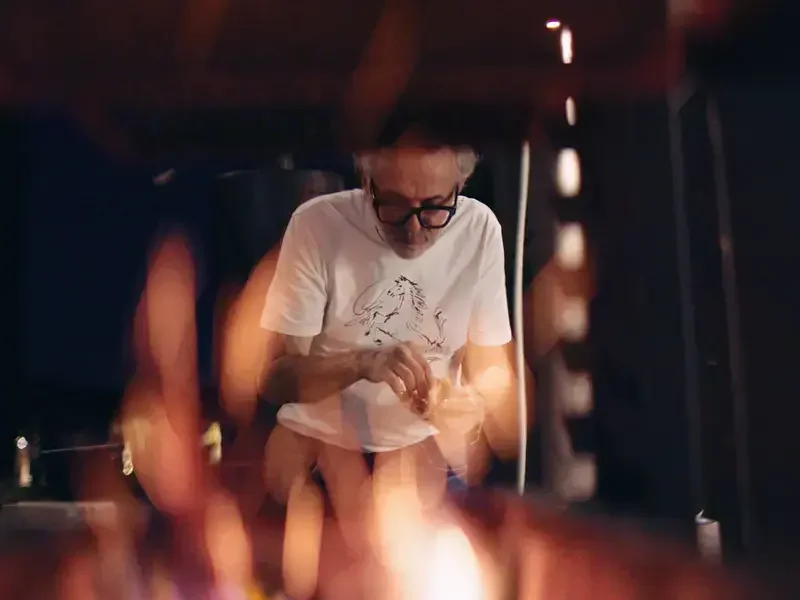
It was around this living ingredient that Firecat took shape – an event that brought together chefs and pizza makers from various countries at Casa Maria Luigia, in the Modena countryside. Organised by Massimo Bottura and Lara Gilmore’s Francescana Family, the event centred on Al Gatto Verde, the Jessica Rosval-run restaurant, where embers, smoke and wood-fired cooking form a true gastronomic language.
The reflections of the chefs involved confirm one thing: there is no single formula for elevating the art of barbecuing. Some focus on the purity of the ingredients; others regard the sauce as an artistic gesture. Others see smoke as an ingredient to be measured with precision. Rather than a set of rules, cooking over an open fire thus emerges as an exercise in listening, balance and sensitivity.
First and foremost… the raw ingredients
What transforms a grilled dish into a signature dish? The most widely accepted answer does not involve adding anything, but rather the ability to let the ingredient remain recognisable. For Alberto Gipponi of Dina in Gussago, Italy, the dish's focus must always be the ingredient itself. He cites grilled turbot as an example: when the fish is exceptional and cooked to perfection, every mouthful reveals different depths and nuances. In great charcoal kitchens, he observes, “the grill is at the centre of everything, yet it is almost imperceptible”: it does not impose its own flavour, but allows the ingredient to be expressed.
Norbert Niederkofler of Atelier Moessmer in the Dolomites advocates the same balance. Sauces, side dishes and plating work when they complement the flavour and tell the same story as the main ingredient. “True luxury often lies in simplicity done well,” he sums up. Albert Adrià of Barcelona’s Enigma takes this reasoning a step further and questions the very need to turn every grilling session into a signature dish. For his lobster, matured for 48 hours in beef rib fat and then grilled, there is no need to add anything else: all that is required is an excellent raw ingredient and a precise concept.
Simplicity, however, is not the same as ease. Daniel Hadida of Restaurant Pearl Morissette in Ontario, Canada, points out that anyone can put something on the grill and achieve a pleasing result; the difference lies in the ability to delicately harness the flavours and aromas produced by the fire. Barbecue becomes haute cuisine when smoke ceases to be a vague effect and becomes a conscious choice.